




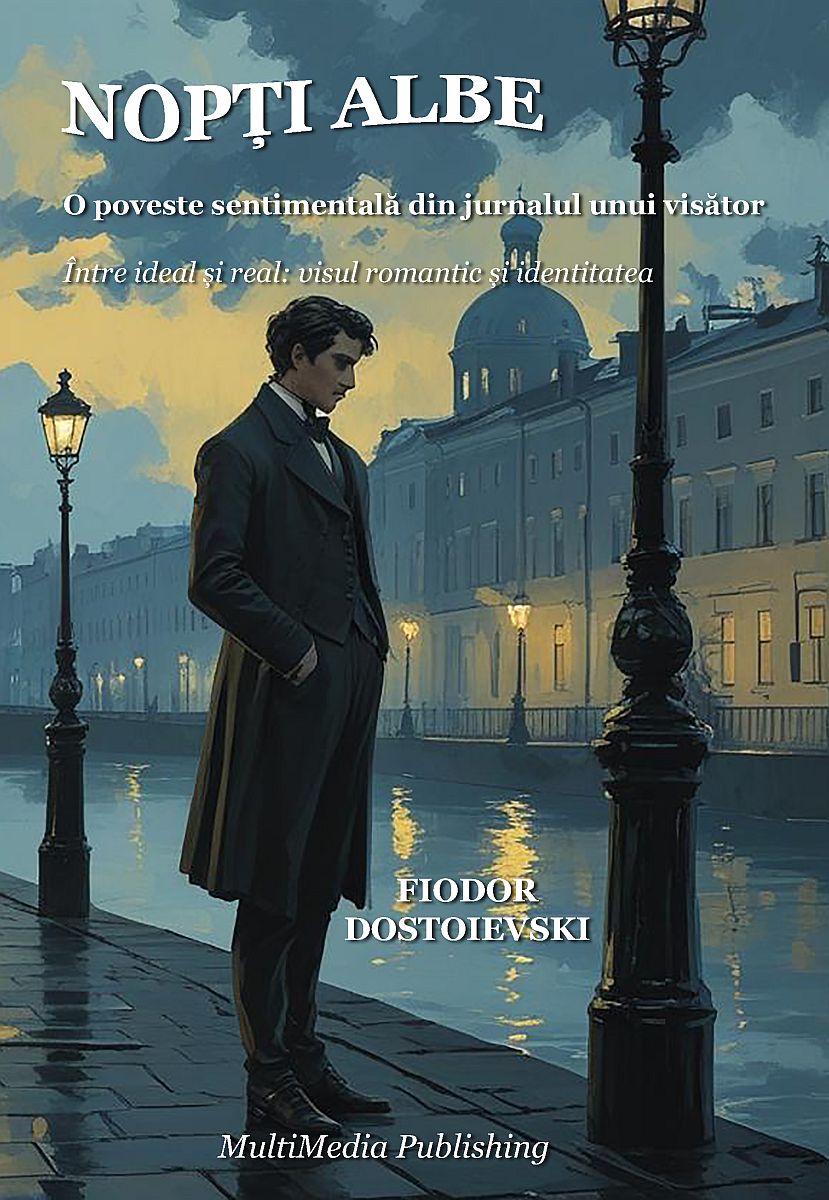
Sfetcu, Nicolae (2025). ”Between Ideal and Real: Romantic Dream and Identity in “White Nights” by Fyodor Dostoevsky”, in Index Academic, I 2025, DOI: 10.58679/IA42545
The article analyzes “White Nights” as much more than a sentimental idyll: a philosophical meditation on alienation, romantic idealism, the tension between dream and reality, and the crisis of identity. “The Dreamer,” the anonymous narrator, is a typical Petersburg urban misfit, for whom loneliness is both a curse and a refuge, anticipating existentialist themes. His idealism – nourished by reading and fantasies – is portrayed ambivalently: Dostoevsky admires his inner richness, but exposes his escapism, and the ending (the reappearance of Nastenka’s fiancé) shows the price of breaking away from reality. The “four-night” structure creates a liminal space in which the dream seems to win, until “morning” restores the concrete; however, the moment of happiness remains valuable as a memory. The protagonist’s identity – nameless, split between the ideal self and the almost non-existent social self – is (re)constructed narratively and in dialogue with the otherness (Nastenka), the experience bringing a discreet maturation. The conclusion underlines the universal relevance of the text: dreams can save and deceive, reality can hurt and mature, and art and memory offer a possible reconciliation between the ideal and the real.
Keywords: White Nights, Feodor Dostoevsky, alienation, loneliness of the individual, existentialism, idealism, dreamer, reality, identity, self
Discover more from MultiMedia
Subscribe to get the latest posts sent to your email.






Reviews
There are no reviews yet.