'/%3E%3C/svg%3E)





Imre Lakatos, The methodology of scientific research programmes – An Overview
The methodology of scientific research programmes is a collection of papers published over time expressing a radical review of Popper’s demarcation criterion between science and non-science, leading to a new theory of scientific rationality. Volume I address aspects of the … Read More

Philosophical Essays
Challenge your mind and reshape your perspective on science and philosophy.

Falsification and refutation
A scientific theory, according to Popper, can be legitimately saved from falsification by introducing an auxiliary hypothesis to generate new, falsifiable predictions. Also, if there are suspicions of bias or error, the researchers might introduce an auxiliary falsifiable hypothesis that … Read More

Blockchain Design and Modelling
Ontology engineering, along with semantic Web technologies, allow the semantic development and modeling of the operational flow required for blockchain design. The semantic Web, in accordance with W3C, “provides a common framework that allows data to be shared and reused … Read More

Lakatos on justificationism
According to the scientific “justificationist” method, knowledge consisted of proven sentences. Classical intellectuals (or “rationalists,” in the narrow sense of the term) have accepted extremely varied – and powerful “proofs“, through revelation, intellectual intuition, experience. These, with the help of … Read More

COVID-19 Pandemic – Philosophical Approaches
Philosophy meets the pandemic to answer questions about humanity, society, and life itself.

About God in Newton’s correspondence with Richard Bentley and Queries in Opticks
In Newton’s correspondence with Richard Bentley, Newton rejected the possibility of remote action, even though he accepted it in the Principia. Practically, Newton’s natural philosophy is indissolubly linked to his conception of God. The knowledge of God seems to be … Read More

The new (liberal) eugenics
Despite the Nazi horrors, in 1953 the new eugenics was founded, when Watson and Crick postulated the double helix of DNA as the basis of chemical heredity. In 1961, scientists have deciphered the genetic code of DNA, laying the groundwork … Read More
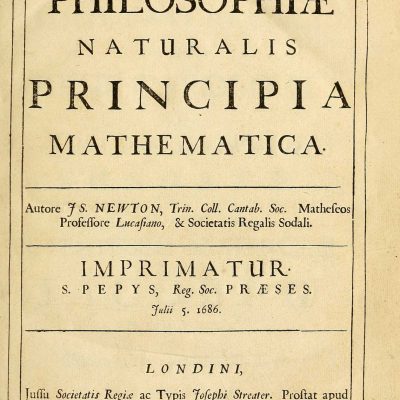
Newton’s Principia on God-mediated action
As John Henry states, Newton simply wants to reaffirm the truth of God’s omnipresence without directly involving him in the physics of the world system. Newton simply wants to distance himself from a Cartesian concept of God and convince the … Read More