




French toast is one of the most popular breakfast dishes around the world, loved for its golden, crispy exterior and soft, custard-like center. Made with simple ingredients such as bread, eggs, milk, and cinnamon, French toast is an easy and delicious way to start the day. Whether served with maple syrup, fresh fruit, powdered sugar, or whipped cream, this classic breakfast can be adapted to suit almost any taste.
Despite its name, French toast is not exclusively French. Variations of bread soaked in eggs and milk have existed for centuries, making it a traditional dish in several cultures. In France, it is commonly known as pain perdu, meaning “lost bread,” because the recipe was originally a way to transform stale bread into a delicious meal.
In this article, we will explore how to make perfect French toast at home, including the necessary ingredients, step-by-step instructions, useful cooking tips, and creative variations.
20 minutes — 2 servings — Easy
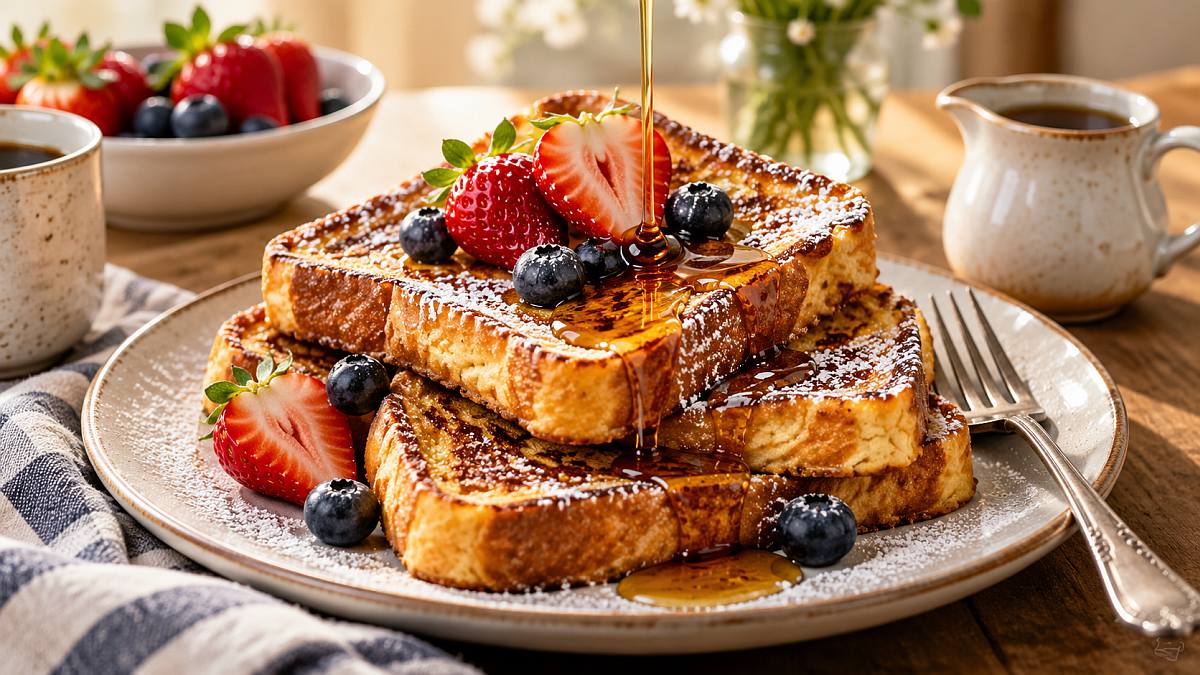
Ingredients for Classic French Toast
To prepare French toast for two people, you will need the following ingredients:
Ingredients:
For serving, you can use maple syrup, honey, powdered sugar, fresh berries, banana slices, or whipped cream. These toppings are optional and can be combined according to personal preference.
Step-by-Step Instructions
Step 1: Choose the Right Bread
The best French toast begins with good-quality bread. Brioche and challah are particularly suitable because their rich texture absorbs the egg mixture without falling apart. Slightly stale bread is often preferable to fresh bread because it absorbs liquid more evenly while maintaining its structure.
Cut the bread into slices approximately 2–3 cm thick.
Step 2: Prepare the Egg Mixture
Crack the eggs into a shallow bowl or dish. Add the milk, vanilla extract, cinnamon, sugar, and salt.
Whisk everything together until the mixture is smooth and well combined. The eggs provide structure, the milk creates a creamy interior, and the cinnamon and vanilla add a pleasant aroma.
Step 3: Soak the Bread
Place one slice of bread into the egg mixture and allow it to absorb some of the liquid. Turn it over to coat the other side.
For thick, slightly stale bread, soaking for approximately 10–20 seconds per side is usually sufficient. Softer bread may require less time.
Avoid soaking the bread excessively, as it may become too soft and difficult to handle.
Step 4: Cook the French Toast
Heat a nonstick skillet or frying pan over medium-low to medium heat. Add a small amount of butter and allow it to melt.
Place the soaked bread slices into the pan, leaving enough space between them. Cook for approximately 2–4 minutes on each side, depending on their thickness and the heat of the pan.
Flip carefully with a spatula when the underside becomes golden brown. The French toast should develop a lightly crispy exterior while remaining soft and fully cooked inside.
Step 5: Serve Immediately
Transfer the cooked French toast to a serving plate. Add your favorite toppings and serve while warm.
For a traditional breakfast, drizzle maple syrup over the slices and sprinkle them lightly with powdered sugar. Fresh strawberries, blueberries, or sliced bananas add natural sweetness and color.
Tips for Making Perfect French Toast
Although the recipe is simple, a few techniques can significantly improve the final result.
-
Use thick bread slices. Thick slices provide a pleasant contrast between the crispy surface and creamy interior.
-
Choose slightly stale bread. Bread that is one or two days old generally holds its shape better when soaked.
-
Control the heat. Medium-low to medium heat allows the center to cook without burning the exterior.
-
Mix the custard thoroughly. Well-beaten eggs prevent uneven patches of cooked egg on the bread.
-
Use butter carefully. Butter improves flavor, but it can burn at high temperatures. A little neutral cooking oil can help reduce scorching.
-
Do not overcrowd the pan. Cooking in batches makes it easier to turn the slices and achieve even browning.
A common mistake is using very high heat. This can produce bread that looks beautifully browned on the outside but remains undercooked and unpleasantly wet in the middle.
Delicious French Toast Variations
One reason French toast remains so popular is its versatility. The basic recipe can be modified with different ingredients and toppings.
Add extra cinnamon and a pinch of nutmeg to the egg mixture for a warmer, more aromatic flavor.
Serve with fresh berries, sliced peaches, or caramelized apples for a refreshing variation.
Spread cream cheese, chocolate hazelnut spread, or fruit preserves between two slices before soaking and cooking.
Omit the sugar, cinnamon, and vanilla. Add black pepper, herbs, and grated cheese to the egg mixture, then serve with eggs or vegetables.
Can French Toast Be Made Without Milk?
Yes. French toast can be prepared without regular dairy milk. Suitable alternatives include almond milk, oat milk, soy milk, or lactose-free milk.
For a dairy-free version, replace the butter with a suitable plant-based alternative or neutral cooking oil.
Eggs are traditionally used to bind the custard mixture, but egg-free French toast is also possible using plant-based milk combined with a small amount of cornstarch or another thickening ingredient. The resulting texture may differ slightly from the traditional version.
How to Store and Reheat French Toast
French toast tastes best when freshly prepared, but leftovers can be stored and reheated.
Allow the cooked slices to cool, then place them in an airtight container in the refrigerator within two hours. Properly refrigerated French toast can generally be kept for 3–4 days.
For longer storage, freeze individual slices with parchment paper between them to prevent sticking. Frozen French toast is best used within approximately 1–2 months for optimal quality.
To reheat, use a toaster, oven, or skillet. These methods help restore some of the crispy texture. A microwave can also be used, although it tends to make the bread softer. Reheat until steaming hot throughout.
Nutritional Considerations
French toast provides carbohydrates from bread, protein from eggs, and some fat from milk and butter. Its nutritional value varies depending on the type of bread, the quantities used, and the toppings.
For a more balanced breakfast, whole-grain bread can increase fiber intake, while fresh fruit adds vitamins and additional dietary fiber. Reducing added sugar and replacing heavy toppings with plain yogurt or fresh berries can make the dish lighter.
Those seeking a more substantial breakfast can serve French toast alongside Greek yogurt, nuts, or other protein-rich foods.
Frequently Asked Questions
Why is my French toast soggy?
Soggy French toast usually results from soaking the bread for too long, using bread that is too thin or soft, or cooking at insufficient heat. Thick, slightly stale slices and moderate cooking temperatures help prevent this problem.
What is the best bread for French toast?
Brioche, challah, and thick white bread are excellent choices. Sourdough can also work well, especially for those who prefer a slightly tangy flavor.
Can I prepare the egg mixture in advance?
Yes. The egg and milk mixture can be prepared the night before and stored in a covered container in the refrigerator. Stir or whisk it again before use, and avoid leaving it at room temperature for extended periods.
Is French toast the same as eggy bread?
The dishes are closely related. French toast is often sweetened and flavored with vanilla or cinnamon, while British-style eggy bread is frequently prepared as a savory dish.
Conclusion
French toast is a timeless breakfast recipe that combines simplicity, affordability, and versatility. With only a few everyday ingredients and approximately 20 minutes of preparation and cooking, it is possible to create a satisfying meal with a golden exterior and a tender, flavorful center.
The secret to excellent French toast lies in choosing suitable bread, preparing a balanced egg mixture, controlling the soaking time, and cooking the slices gently until golden brown.
Whether enjoyed with traditional maple syrup, fresh fruit, or creative sweet and savory toppings, homemade French toast is an inviting way to transform ordinary bread into something special.
Discover more from MultiMedia
Subscribe to get the latest posts sent to your email.






Leave a Reply