




Artificial intelligence, often abbreviated as AI, is one of the most important technologies of the present day. It already influences the way we work, communicate, learn, shop, get information, and make decisions. Although the term may sometimes seem complicated or reserved for specialists, the basic idea is relatively simple: artificial intelligence refers to computer systems capable of performing tasks that would normally require human intelligence.
These tasks may include image recognition, understanding natural language, automatic translation, analyzing large amounts of data, making decisions, and generating texts, images, music, or computer code. In other words, AI allows computers to “learn” from data and produce useful results without being explicitly programmed for every possible situation.
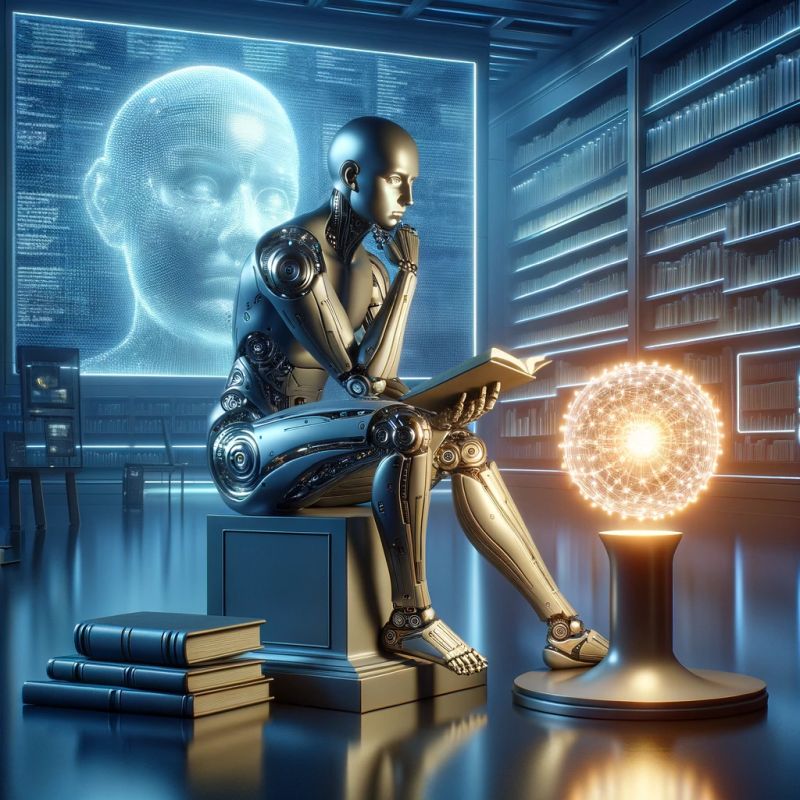
A Simple Definition of Artificial Intelligence
Artificial intelligence can be defined as the branch of computer science that develops systems capable of simulating certain forms of human intelligence. These systems can observe information, identify patterns, make predictions, and respond to complex requests.
For example, when a navigation app recommends the fastest route, when a phone recognizes the user’s face, when an online store suggests products, or when a chatbot answers questions, forms of artificial intelligence are behind these functions.
AI does not necessarily mean a robot with a human appearance. Most of the time, artificial intelligence is invisible to the user. It works inside apps, websites, search engines, recommendation systems, analysis programs, mobile phones, cars, medical devices, or educational platforms.
How Does Artificial Intelligence Work?
Artificial intelligence generally works by processing data. An AI system receives a large amount of information, analyzes it, and learns to identify relationships or patterns. Based on these patterns, the system can then make predictions, offer recommendations, or generate new content.
A very important concept is machine learning. Instead of a programmer manually writing all the rules, the system is trained with examples. For instance, in order to recognize images of cats, an AI system may be exposed to thousands or millions of labeled photographs. After training, it can identify cats in new images it has never seen before.
An advanced form of machine learning is deep learning. It uses artificial neural networks inspired, to some extent, by the way the human brain works. These networks can process complex data such as images, sounds, texts, or videos.
Types of Artificial Intelligence
Depending on their capabilities, artificial intelligence systems can be divided into several categories.
The most widespread form is narrow or specialized artificial intelligence. It is designed to solve a specific task: translation, voice recognition, assisted diagnosis, movie recommendations, fraud detection, or text generation. Most AI applications that exist today belong to this category.
Another concept is artificial general intelligence. This would refer to a system capable of understanding, learning, and acting flexibly in many different fields, at a level comparable to human intelligence. At present, this type of AI remains mainly a research goal and a subject of debate, not an ordinary technological reality.
There is also discussion about artificial superintelligence, meaning an intelligence that would significantly surpass human capabilities in almost all fields. This concept is still speculative and raises many philosophical, ethical, and social questions.
Examples of Artificial Intelligence in Use
Artificial intelligence is used in many fields. In medicine, it can help analyze medical images, identify risks, or support diagnosis. In education, it can personalize the learning process, provide additional explanations, and help teachers create teaching materials.
In business, AI is used to automate repetitive tasks, analyze customer behavior, optimize prices, manage inventories, and improve customer service. In transportation, it contributes to route optimization, the development of autonomous vehicles, and traffic management.
In everyday life, we encounter AI in search engines, voice assistants, translation apps, spam filters, social networks, smart cameras, recommendation systems, and image editing applications.
One field that has become highly visible is generative artificial intelligence. It can create texts, images, code, music, presentations, or summaries based on instructions given by the user. Such tools can be useful for writing, research, brainstorming, programming, translation, education, and communication.
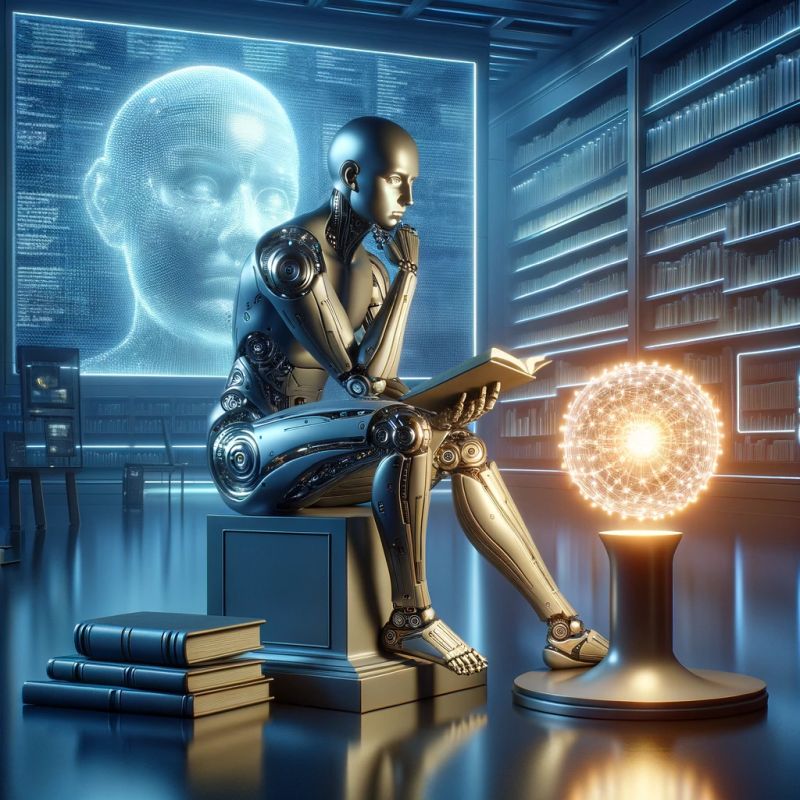
The Advantages of Artificial Intelligence
A major advantage of AI is its ability to process very large amounts of data quickly. A human can analyze only a limited number of documents, images, or recordings, while an AI system can process huge volumes of information in a short time.
Artificial intelligence can increase efficiency, reduce costs, and automate repetitive activities. It can help people make better decisions by providing analyses, predictions, and possible scenarios. It can also make certain services more accessible, such as automatic translation, educational assistance, or basic digital consulting.
In many cases, AI does not replace humans but extends their abilities. A doctor can use AI to analyze medical images more quickly, a teacher to prepare teaching materials, a journalist for research, a programmer to check code, and an entrepreneur to analyze the market.
Risks and Limitations
Despite its advantages, artificial intelligence also has important limitations. AI systems can make mistakes, misinterpret data, or produce false information presented in a convincing way. For this reason, AI-generated results must be checked, especially in important fields such as medicine, law, finance, education, or public administration.
Another issue is related to the data used to train systems. If the data is incomplete, biased, or incorrect, AI results may reproduce or even amplify these problems. For example, a system used for candidate selection, loan approval, or social behavior analysis may produce unfair decisions if it is not carefully designed and tested.
There are also risks concerning privacy, data security, copyright, information manipulation, misinformation, and excessive dependence on technology. For this reason, the development and use of artificial intelligence must be accompanied by clear rules, responsibility, and transparency.
Artificial Intelligence and Jobs
One of the most discussed topics is the impact of AI on jobs. Some repetitive or standardized activities can be automated, which may lead to the transformation or disappearance of certain professions. At the same time, new occupations and new skills are emerging in the labor market.
Most likely, AI will change many jobs rather than eliminate all of them. People will need to learn how to collaborate with these tools, use them effectively, and develop skills that remain deeply human: critical thinking, creativity, empathy, moral judgment, communication, and the ability to understand complex contexts.
Is Artificial Intelligence Truly Intelligent?
The answer depends on what we mean by “intelligence.” AI systems can solve very difficult tasks, analyze data, and generate impressive results. However, they do not think or understand the world in the same way humans do. They do not have consciousness, intentions, emotions, or personal experience.
AI works on the basis of mathematical and statistical models. It can imitate certain forms of reasoning and communication, but it does not possess genuine human understanding. Therefore, it is important not to confuse the technical performance of a system with human intelligence in the full sense of the word.
The Future of Artificial Intelligence
Artificial intelligence will continue to develop and influence more and more fields. AI applications are likely to become more powerful, more accessible, and more integrated into everyday life. We will see better tools for education, research, health care, administration, culture, production, transportation, and communication.
At the same time, the future of AI depends on how society decides to use it. Technology itself is neither good nor bad; its effects depend on the purposes, rules, and values of those who develop and apply it. Useful artificial intelligence must be safe, transparent, fair, and oriented toward human well-being.
Conclusion
Artificial intelligence is a technology that allows computers to perform tasks traditionally associated with human intelligence. It can analyze data, recognize patterns, make predictions, answer questions, and generate content. It is already present in many aspects of modern life and has enormous potential for transformation.
However, AI is not magic, nor is it infallible. It must be understood, checked, and used responsibly. The best approach is neither uncritical enthusiasm nor exaggerated fear, but a balanced understanding: artificial intelligence is a powerful tool that can help people if it is developed and used with discernment.
Discover more from MultiMedia
Subscribe to get the latest posts sent to your email.





Leave a Reply