




Choosing the right topic or niche for your book isn’t about guessing what “the market” wants. It’s about finding the overlap between what you can write brilliantly, what readers actually care about, and what makes sense strategically.

Here’s a practical, no-fluff guide to get you there.
1. Start with three intersecting questions
Use this simple filter:
- What do I know?
- Work experience
- Life experience (struggles, wins, unique perspectives)
- Hobbies and skills
- Things people already ask you for help with
- What do I care about enough to finish a whole book on?
- You don’t need eternal passion.
- You do need sustained interest for months of drafting and revising.
- What do readers already show they care about (and pay for)?
- Look at books, podcasts, blogs, YouTube channels in your area.
- If nothing remotely similar exists, that’s usually a warning, not a green light.
Your ideal topic sits where these three overlap. If it only fits two (e.g., you care + know, but no audience), park it as a side project idea, not your main bet.
2. Turn “broad idea” → clear niche
“Health,” “business,” “mindset,” “fantasy,” “romance” are not niches. They’re continents.
Niche it down by answering:
- Who exactly is this for? (One sentence.)
- What specific problem, desire, or experience does it focus on?
- What makes your angle different?
Examples:
- Instead of: “Productivity”
→ “Productivity for ADHD creatives who hate rigid systems.” - Instead of: “Personal finance”
→ “Money basics for first-gen professionals who feel guilty earning more than their parents.” - Instead of: “Fantasy”
→ “Standalone cozy fantasy set in a magical tea shop, for readers who want warmth, low stakes, and rich world-building.”
Clear beats clever. Specific beats broad.
3. Audit your credibility (honestly)
Ask: Why should a stranger trust me on this?
You do not need to be the #1 world expert. But you need at least one of:
- Lived it (e.g., single parent balancing career, recovered from burnout)
- Done it (built a business, ran marathons, taught hundreds of students)
- Studied it (psychology, history, craft mastery, etc.)
- Curated it well (synthesizing experts, case studies, interviews)
If your idea excites you but your credibility is thin, that’s not fatal. Consider:
- Narrowing the promise (e.g., “what worked for me,” not “ultimate guide for everyone”)
- Partnering with someone more experienced
- Repositioning as a journey story instead of an authority manual
If you find yourself faking or inflating—wrong topic.
4. Test your idea fast (before you marry it)
Don’t guess. Run quick experiments:
- Talk test: Explain your idea in 20–30 seconds to someone who reads.
Watch:- Do their eyes light up?
- Do they ask follow-ups?
- Or do they say “nice” and change subject?
- Question test: Post or ask:
- “If there was a short, practical book about [your topic/angle], what would you want it to answer?”
- Collect actual questions; if nobody bites after a few tries, signal.
- Content test:
- Write 1–3 short pieces (blog posts, newsletter, threads, videos).
- See which idea pulls more engagement, replies, or saves (not just likes from your friends).
You’re not proving you’re “good enough” yet; you’re proving the topic has traction.
5. Define a sharp promise
A strong topic can be summed up as:
“This book helps [specific reader] go from [current state] to [desired state] through [your angle/method/story].”
Examples:
- “This book helps freelance designers go from feast-or-famine income to a waitlist of ideal clients using positioning, pricing, and systems that fit creatives.”
- “This book helps burned-out high achievers go from chronic overwork to sustainable ambition using simple, research-backed habit shifts.”
- “This novel gives millennial readers an achingly honest yet hopeful love story about grief, friendship, and starting over in your 30s.”
If you can’t write this sentence, your idea is still fuzzy.
6. Check the bookshelf (strategically, not anxiously)
Go to your category and:
- List 5–10 books close to your idea.
- For each, note:
- What promise do they make?
- Who are they for?
- How thick? Tone? Structure?
Then answer:
- Where’s the gap?
- What would readers complain is missing?
- How can your book sit on the same shelf and offer something distinct?
You’re not trying to be “totally unique.” You’re trying to be:
“If you liked X and Y, this is the next book you’ll want.”
7. Align your topic with your long game
Ask:
- Do I want this book to:
- Attract clients or speaking gigs?
- Build authority in a field I’ll stay in?
- Launch a series or universe?
- Just get this one story out of me?
Choose a niche that doesn’t box you into a life you don’t want.
Examples:
- If you never want to coach productivity, maybe don’t brand yourself “The Productivity Guy” with your debut.
- If you love your industry, a tightly niched problem-solver book there can compound your opportunities.
Your future self has to live with this positioning.
8. Watch for red flags (that feel good, but aren’t)
Be cautious if your topic is driven by:
- “No one has ever written about this, so it’ll be huge.” (Usually they haven’t for a reason.)
- “This is what’s trending on TikTok.” (Trends move faster than books.)
- “It’ll appeal to everyone.” (Which means: no one urgently.)
Instead, look for:
- A hungry, reachable slice of readers
- A problem or desire that won’t vanish in 6 months
- A topic you can inhabit without forcing it
9. Make the decision (without overthinking for eternity)
At some point, you stop browsing and choose.
Use this quick scoring check (1–5 each):
- I know enough or can learn fast.
- I care enough to stay with it.
- There is a clear reader.
- There are similar successful books (proof) and an angle gap.
- It aligns with my bigger goals.
Total /25.
If it’s 18+, write the book.
If it’s 14–17, refine the angle, not the whole idea.
If it’s ≤13, you probably have a “nice thought,” not your book yet.


War and Peace (Annotated: History, Philosophy and Geopolitics), by Leo Tolstoy
Immerse yourself in one of the greatest novels ever written, enriched with insightful annotations.
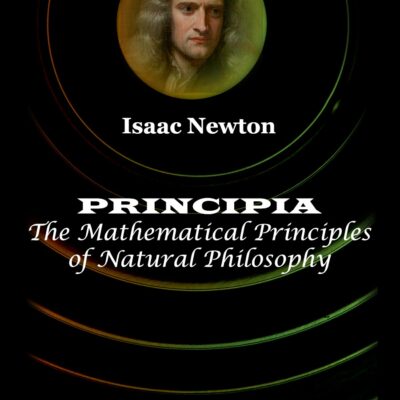
Principia: The Mathematical Principles of Natural Philosophy (Annotated)
Unravel the mysteries of the universe with Newton as your guide.

Causal Loops in Time Travel
Welcome to the Fascinating World of Time Travel and Paradoxes!
Discover more from MultiMedia
Subscribe to get the latest posts sent to your email.





Leave a Reply