




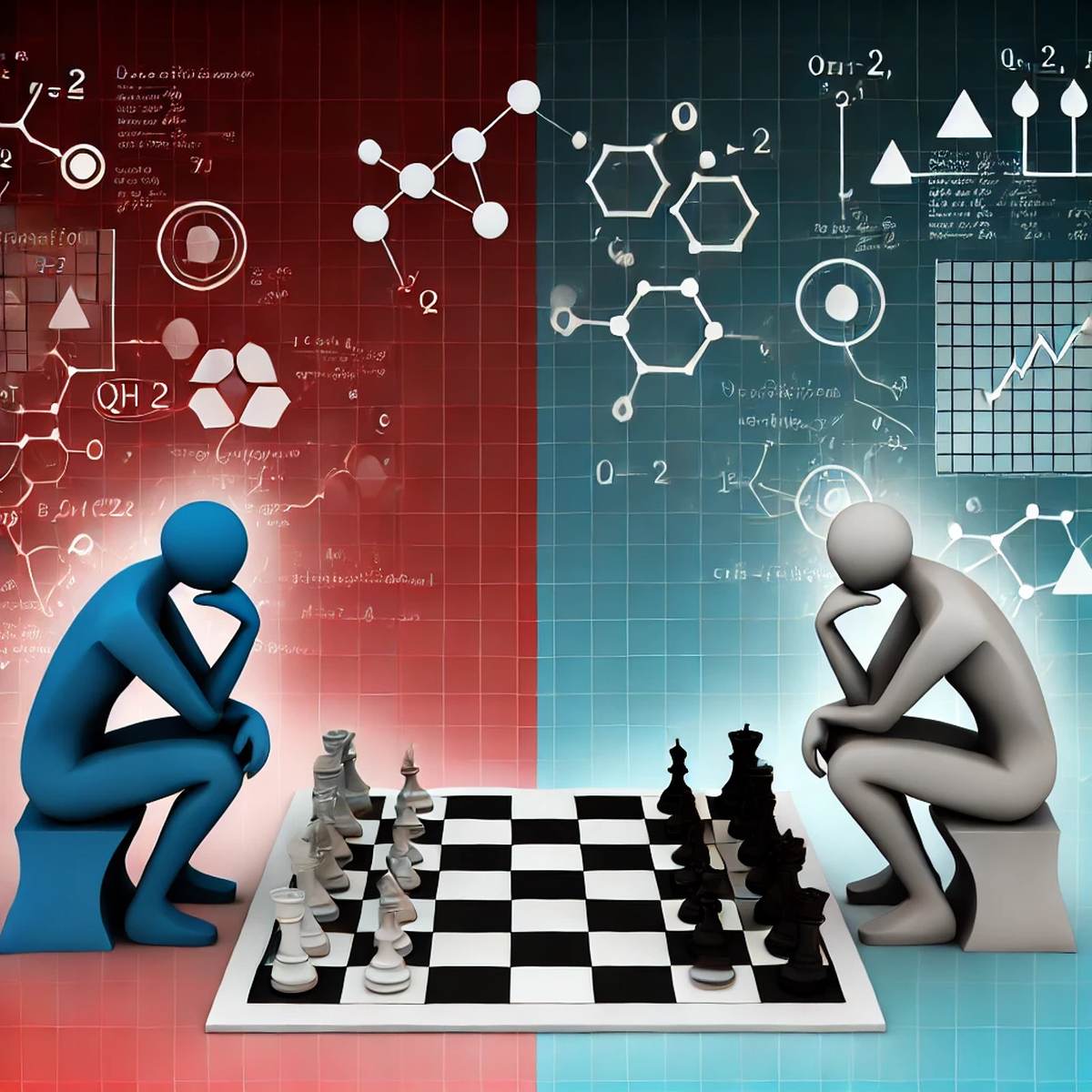
 Regular chess practice can contribute to the development of several intellectual and personal skills. These benefits do not appear automatically after only a few games. They develop gradually through study, practice, and analysis.
One of the most important skills is concentration. During a game, the player must follow the position of the pieces, threats, variations, and the available time. A brief lapse in attention can lead to the loss of a piece or even the entire game.
Chess teaches players to maintain their attention on a task and to refocus after difficult moments. In longer games, this ability is tested especially strongly.
Another important skill is observation. A player must see the relationships between pieces: what is attacked, what is defended, which lines are open, and which moves are possible. Beginners often notice only one part of the board. Through practice, they learn to examine the position as a whole.
Chess also develops logical thinking. Every move should have a reason. The player compares variations, identifies cause-and-effect relationships, and checks whether an idea can withstand the opponent’s replies.
The game also trains problem-solving ability. Every position can be seen as a problem with several possible solutions. The player must identify the main difficulty and find a suitable continuation.
Sometimes the problem is tactical: is there a move that wins the opponent’s queen? At other times it is strategic: how can a poorly placed piece be improved? In an endgame, the problem may be very precise: can a pawn promote before the opposing king stops it?
Chess also develops the ability to anticipate. The player imagines what will happen after a move and after the opponent’s reply. As players improve, they become able to analyze longer sequences and compare the resulting positions.
This anticipation is closely connected with visual imagination. A player must sometimes “see” mentally a position that does not yet exist on the board. The player imagines where the pieces will be and what relationships will arise between them.
Memory also plays an important role. Players remember rules, checkmate patterns, tactical motifs, strategic principles, and typical positions. At an advanced level, they may memorize opening variations and theoretical endgames.
However, improvement in chess does not depend only on memorization. Understanding ideas is more important. A player who memorizes moves without understanding them may run into difficulties as soon as the opponent chooses a different continuation.
Chess develops patience and self-control. The player must avoid impulsive moves and check ideas carefully. Sometimes it is tempting to launch an attack immediately, but the position may require careful preparation.
Self-control is also important after a mistake. A player who loses a piece may become nervous and make further errors. A player who remains calm may still find defensive resources or create difficulties for the opponent.
Managing emotions is part of the chess experience. Victory may bring satisfaction, while defeat may be unpleasant. Over time, players learn to approach both results with balance.
Chess encourages personal responsibility. In general, every move is the result of the player’s own choice. The player must accept that a poor decision was their own and try to understand why it was made.
This attitude is essential for improvement. A player who always blames the opponent, the clock, or bad luck learns more slowly. A player who honestly analyzes mistakes can turn a loss into a useful lesson.
The game also develops planning ability. The player sets objectives, chooses the order of actions, and adjusts the plan when the position changes. A good plan is not rigid. It must be modified in response to the opponent’s moves.
Mental flexibility is therefore another important skill. A player may begin with one idea but must abandon it if the opponent prevents it or if a better opportunity appears.
Creativity is present in many games. Sometimes a position can be solved by an unexpected move, a sacrifice, or an original maneuver. Although chess has strict rules, it offers many possibilities for personal expression.
Chess can also help develop study discipline. To improve, players must practice regularly, solve problems, analyze games, and return to concepts they did not understand.
At the same time, the game can foster respect for the opponent. Fair play requires following the rules, behaving respectfully, and accepting the result. The opponent is not an enemy, but the partner without whom the game could not exist.
For children, chess can be a valuable exercise in attention and responsibility. For adults, it can provide intellectual stimulation and active relaxation. For older adults, it can offer an engaging mental and social activity.
It is important, however, not to attribute miraculous effects to chess. The game does not replace education, reading, physical activity, or practical experience. It is one of many activities that can support the development of certain abilities when practiced in a balanced and consistent way.
Perhaps the most important quality developed by chess is the desire to learn. Every game reveals things that could have been done better. Even the strongest players continue to study, analyze, and correct their play.
In this sense, chess is more than a contest for victory. It is a continuous process of discovery in which the player learns both about the pieces on the board and about their own way of thinking.
Discover more from MultiMedia
Subscribe to get the latest posts sent to your email.





Leave a Reply