




A year feels like a simple thing—until you try to answer the deceptively basic question: how many days are in a year? The short version is “365,” but the real answer depends on what kind of year you mean, which calendar you’re using, and what you’re trying to measure (civil time, seasons, Earth’s orbit, or something else). Here’s the full story, in plain language.
The standard answer: 365 days
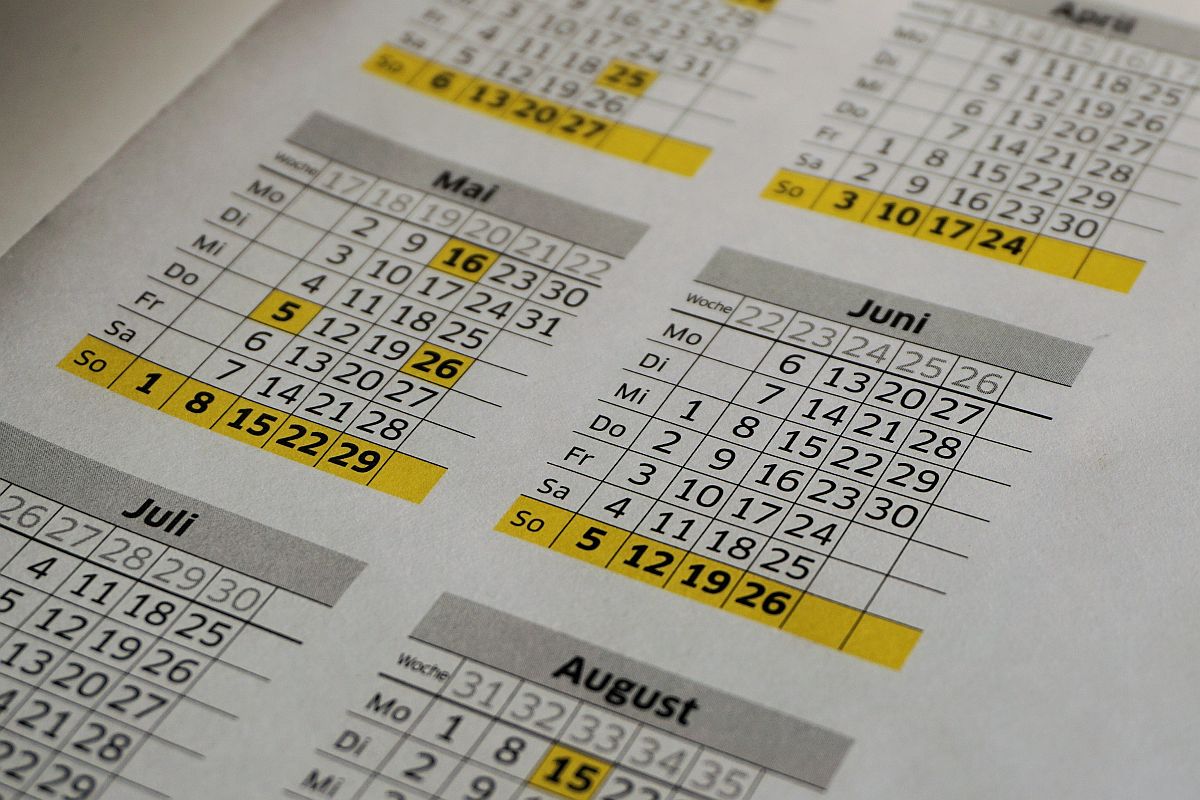
In the modern Gregorian calendar (the one used by most of the world), a common year has 365 days. That’s the familiar pattern of 12 months totaling 365 days.
But Earth doesn’t take exactly 365 days to go around the Sun. It takes a bit more—so if we only used 365-day years, the seasons would drift over time, and eventually “summer” would land in what we’d call winter months.
Leap years: 366 days (sometimes)
To keep the calendar aligned with Earth’s orbit and the seasons, we occasionally add an extra day.
A leap year has 366 days. The extra day is added to February, which becomes 29 days long instead of 28.
The leap year rules (Gregorian)
A year is a leap year if:
- It is divisible by 4, except:
- Years divisible by 100 are not leap years, unless:
- They are divisible by 400, in which case they are leap years.
So:
- 2024 → divisible by 4 → leap year ✅
- 1900 → divisible by 100 but not 400 → not a leap year ❌
- 2000 → divisible by 400 → leap year ✅
This system makes the average calendar year length very close to the real solar year.
Why the weird rules?
Because Earth’s orbit length doesn’t match a neat fraction of a day.
A tropical year (the cycle of seasons—roughly from one March equinox to the next) is about 365.2422 days. If we added a leap day every 4 years with no exceptions, we’d average 365.25 days, which is slightly too long. That tiny difference would add up.
The Gregorian rules fine-tune it:
- Over 400 years:
- There are 400 × 365 = 146,000 base days
- Plus 97 leap days (because 400/4 = 100, minus 3 century years not divisible by 400 → 97)
- Total = 146,097 days in 400 years
- Average year length = 146,097 ÷ 400 = 365.2425 days
That’s extremely close to 365.2422, so the seasons stay in the right neighborhood for a very long time.
What about “a year” in astronomy?
If you mean “one orbit around the Sun,” there are a few definitions:
- Tropical year (seasonal year): ~365.2422 days
- Sidereal year (relative to distant stars): ~365.2564 days
They’re slightly different because Earth’s axis slowly wobbles over time (a motion called precession), which affects how we measure “one full cycle.”
So if you’re doing astronomy, climate science, or precise timekeeping, “a year” often isn’t exactly 365 or 366—it’s a measured duration.
Different calendars, different year lengths
Not every calendar uses the Gregorian system:
- Islamic (Hijri) calendar: purely lunar; a year is about 354 or 355 days. Months follow the Moon, so holidays move through the seasons over time.
- Hebrew calendar: lunisolar; it adds leap months to keep lunar months aligned with seasons.
- Some traditional calendars: vary by cultural rules or astronomical observation.
So the answer changes depending on the calendar’s purpose: tracking seasons, lunar months, religious observances, or administrative consistency.
So… how many days are in a year?
It depends on what you mean:
- Common calendar year (Gregorian): 365 days
- Leap year (Gregorian): 366 days
- Average Gregorian year: 365.2425 days
- Tropical year (seasons): about 365.2422 days
- Sidereal year (stars): about 365.2564 days
- Islamic lunar year: about 354–355 days
A simple way to remember it
Think of it like this:
- Calendar years are built for daily life (easy months, predictable dates).
- Leap days are a correction (because nature doesn’t fit neatly into whole days).
- Astronomical “years” are measurements (useful when precision matters).
Discover more from MultiMedia
Subscribe to get the latest posts sent to your email.






Leave a Reply