




People learn bridge for different reasons. Some are attracted by its intellectual dimension. Others are looking for a social activity, a form of relaxation, or a game they can enjoy throughout their lives.
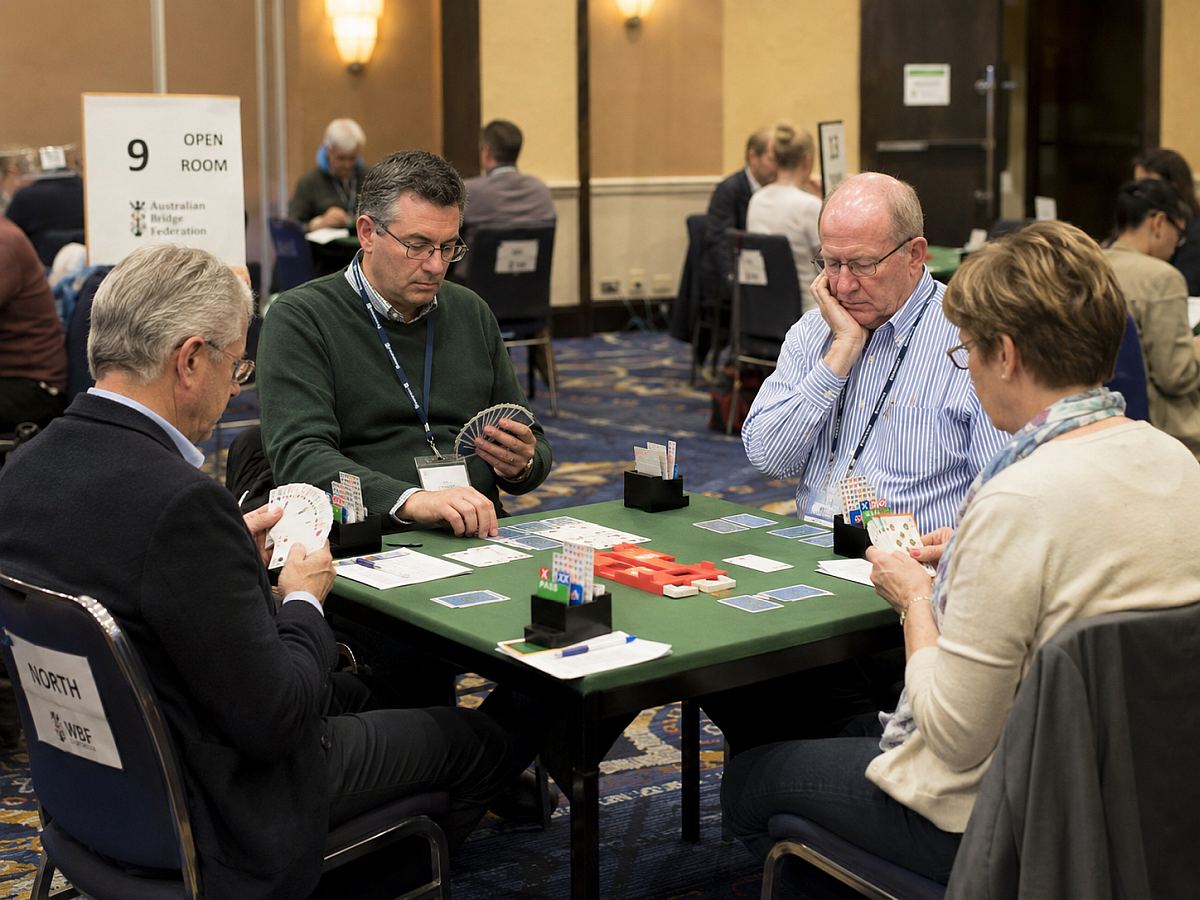
One of the main advantages of bridge is the stimulation of thought. The game demands attention, logic, memory, and planning. The player must analyze incomplete information, compare alternatives, and anticipate the consequences of a decision.
During the auction, the player evaluates the strength of the hand, the distribution of the cards, and the possibilities available to the partnership. During the play, the player creates a plan and adjusts it according to new information. On defense, the player tries to interpret the intentions of both partner and declarer.
Every deal presents a new problem. Although the rules remain the same, the distribution of the cards and the sequence of decisions vary. The number of possibilities is so great that the game never becomes repetitive.
Bridge also develops disciplined thinking. A good player tries not to rely only on impressions. The player counts, compares, and checks. One learns to ask which facts are actually known and which conclusions can reasonably be drawn from them.
This habit is useful outside the game as well. Bridge encourages players to distinguish between facts, assumptions, and probabilities.
Another advantage is the development of concentration. A bridge hand requires careful attention to both the auction and the cards that have been played. Losing focus even briefly may result in missing an important piece of information.
As experience grows, the player learns to select the information that matters and not to be overwhelmed by every detail. The aim is not to memorize every card mechanically, but to follow the elements that influence the plan.
Bridge is also a social activity. The game brings together people of different ages, professions, and backgrounds. Friendships, partnerships, and communities develop in clubs and competitions.
Unlike many other competitive activities, bridge can be played at almost any age. Physical strength is not decisive, and accumulated experience can compensate for slower reactions.
The game can be enjoyed by young people as well as older adults. There are school competitions, university events, senior events, pairs tournaments, team events, and mixed competitions.
Bridge also provides the satisfaction of progress. At first, a player may be pleased simply to follow suit correctly, count points, and reach a simple contract. Later, satisfaction may come from an accurate auction, a sound plan of play, or a well-coordinated defense.
Progress is easy to observe. Situations that initially seemed complicated gradually become familiar. The player begins to recognize patterns, avoid mistakes, and make decisions with greater confidence.
Bridge also teaches us to accept uncertainty. Not every correct decision produces a good result, and not every poor decision is punished immediately.
A player may choose the line of play with the highest probability of success and still fail because of an unfavorable distribution. On another occasion, a weak choice may produce a good result by chance.
For this reason, analysis should not begin only with the final result. The correct question is not always “Did I win?” but rather “Did I make the decision that offered the best chance on the information available?”
This attitude develops patience and balance. The player learns to accept mistakes, analyze them, and continue.
Bridge also encourages responsibility toward the partner. The result belongs to the partnership, not to one individual. When a misunderstanding occurs, both partners should identify the cause and improve their method of communication.
A good partner is not only someone who plays well. A good partner also remains calm, respects the other player’s decisions, and does not turn every mistake into a criticism.
Finally, bridge can be played for a lifetime. The basic rules can be learned in a relatively short time, but the game continues to offer new challenges even after many years.
There is always something to improve: bidding, declarer play, defense, counting, risk assessment, or cooperation with a partner. This combination of accessibility and depth is precisely what makes bridge so appealing.
Discover more from MultiMedia
Subscribe to get the latest posts sent to your email.





Leave a Reply