Fine tuning argument for the existence of God – The adjustment of the constants of the Universe

|

The characteristics of the universe in which we evolve depend on about fifteen physical constants. In the current absence of a unifying principle, they are considered independent of each other. The advent of supercomputers allowed astrophysics to model the development … Read More


The main features of classical pragmatism in the social sciences

|

The inquiry theory The inquiry as fixation of belief in Peirce In The Fixation of Belief (1877), Peirce thinks of inquiry not as the pursuit of truth per se, but as a struggle to move from irritating and inhibiting doubt … Read More

Contemporary Idealism

|

Thomas Nagel The philosopher of mind Thomas Nagel, although long associated with a form of epistemological dualism concerning the body-mind relationship (the “dual aspect theory”), introduced himself in a book by 2012 as an idealist, in direct opposition to materialism … Read More

Metaphysics and its function

|

A contested science Immanuel Kant asserts, in the introduction to his Prolegomena: “since the origin of metaphysics, however far its history goes back, nothing has happened that could have been more decisive for the destinies of this science than the … Read More

Riots

|

Riots occur not when incomes fall, but when differences between incomes increase. ~ Nicolae Sfetcu

Performance art and Dadaism – Cabaret Voltaire

|

Performance art is believed to be rooted in the radical Futurist and Dadaist soirees of early 20th century Europe. Others situate its beginnings in connection with the questioning of modernist visions in the 1960s and 1970s marked by political protest … Read More

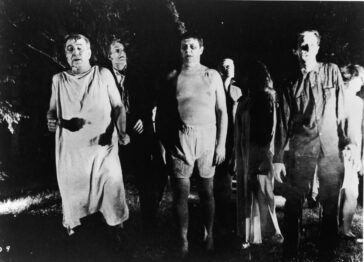
Thought experiments: “p-zombie”

|

(Zombies as portrayed in the movie Night of the Living Dead, direction and cinematography by George A. Romero) In philosophy of the mind, a “zombie” (philosophical zombie or p-zombie) designates a being physically and externally indistinguishable from a conscious being, … Read More

Special scientific methods in research

|

Complementarity between analytical and synthetic methods The study and understanding of phenomena, for example biological, requires the use of different scientific methods of research and reflection. The two major scientific methods, complementary, are reductionist analysis and systemic transdisciplinary synthesis. Reductionist … Read More

Features, limits and criticism of the representative democracy

|

Features Vote In a representative system, voting is a mode of designation and not a transfer of responsibility. Elected officials derive their legitimacy from the delegation of sovereignty to their electors since the latter then no longer have any means … Read More

Teleological argument for the existence of God

|

The appeal to design or teleological argument postulates that there are ends in nature, which implies the existence of an intelligent principle, orderer of the world, that is to say of a Creator. This is the classic argument of natural … Read More

Pragmatism and philosophy

|

An original conception of philosophy For several reasons, pragmatism has long passed, especially in Europe, for a non-philosophy or for an “American redneck”. First of all, pragmatism is an active philosophy that does not seek truth through intellectualism alone. Its … Read More

Absolute idealism

|

Schelling and the “philosophy of identity” (Friedrich Wilhelm Joseph von Schelling.) At the very end of the 18th century, Friedrich W. J. Schelling, a young German philosopher claiming to be first of Fichte, wrote a series of works which influenced … Read More

1 … 40 41 42 43 44 45 46 … 384