Notions of metaphysics

|

Ideas Aspect, form or structure that makes visible, shows the reality of a thing, represents for the Platonic philosophers an intelligible form, subtracted from becoming. Aristotle, who questions his ontological status, opposes the separate character of the idea that Plato … Read More
Analytic aesthetics: Wittgenstein and conceptual art – Nelson Goodman: when is there art?

|

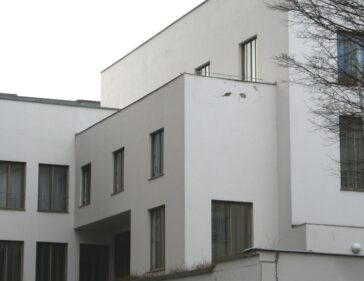
Wittgenstein and conceptual art (The Wittgenstein House (Haus Wittgenstein), Vienna, designed by Ludwig Wittgenstein himself and the architect Paul Engelmann, a pupil of Adolf Loos.) Ludwig Wittgenstein can be considered one of the founders of analytic aesthetics, his predecessors within … Read More

Thought experiments: Chinese room

|

(According to its author, the Turing test authorized the attribution of a form of mind to certain artificial systems based on a principle of indiscernibility of responses.) The Chinese room is a thought experiment presented by John Searle in a … Read More

Technical and commercial stages of a book publishing

|

The technical sphere At the production stage, many specialists (layout artists, compositors, graphic designers, proofreaders, printer, photoengraver, etc.) work successively, but also in collaboration, on the production of the work. The designer carries out the layout and integrates, if necessary, … Read More

Justification and discovery – Methods in the context of discovery

|

Contexts of justification and discovery Hans Reichenbach, who was close to logical positivism, distinguished between context of justification and context of discovery. The discovery context relates to the process that leads to proposing a theoretical result, while the justification context … Read More

Empirical arguments against the existence of God

|

Arguments of the indigence of Creation The argument for the neediness of Creation arises from the following question: How could God, being perfect, have created an imperfect world? It takes the form of the following contraposition: If there is a … Read More

Currents of thought and instruments of direct democracy

|

Philosophers and currents of thought linked to direct democracy Age of Enlightenment In the 18th century, Europe rediscovered the democratic ideal with Jean-Jacques Rousseau, theoretician of popular sovereignty, and the encyclopaedists who were the Enlightenment. The author of The Social … Read More

Structuralism in the United States

|

The plurality of disciplines involved in structuralism and the methodologies used reflects the heterogeneous nature of the classic definition of it, and some authors (such as Jean Piaget in psychology) prefer to insert structuralism into a long-term history of scientific … Read More

Subjective idealism

|

Berkeley’s immaterialism (John Locke, whose empiricism strongly influenced the thinking of George Berkeley.) During the first half of the 18th century, the Irish philosopher, theologian and bishop George Berkeley developed a radical but influential idealist conception, later called “subjective idealism”, … Read More

Classical, minimal, and intuitionist logic

|

The axioms and rules of propositional calculus for the classical logic induce the proposition p ∨ ¬p, called the principle of excluded middle, the proposition ¬¬p → p, called elimination of double negation and the proposition ((p → q) → … Read More

Non-Western aesthetics

|

Chinese aesthetics (Buddhist temple in the mountains, old copy after Li Cheng.) Chinese art has a long history of evolving styles and designs. In ancient times, philosophers were already discussing aesthetics. Confucius (551-478 BCE) emphasized the role of arts and … Read More

China brain thought experiment

|

(In Ned Block’s thought experiment, each member of the Chinese population performs the same functions as a neuron in the brain. he population of China is 1.4×10⁹ people, while a human brain is estimated to have ≈1011 neurons. ) The … Read More

1 … 41 42 43 44 45 46 47 … 384