




“Why is there a speed limit?” can mean two slightly different things:
- Why is there any maximum speed at all—why isn’t information allowed to propagate arbitrarily fast?
- Why is the limit the particular value we call c—about 3 x 10⁸ m/s?
Physics gives strong, precise answers to the first—and only partial, model-dependent hints to the second.

Open cluster NGC 376 in the Small Magellanic Cloud, imaged by the Hubble Space Telescope (ESA/Hubble & NASA)
What the speed limit actually is
The “speed of light” c is better described as the invariant speed built into the geometry of spacetime. In special relativity, every event has a light cone: the set of places you can reach or be influenced by, moving at or below c. This cone structure partitions the universe into causally reachable (inside the cone) and causally disconnected (outside).
Anything that carries information, influence, or energy must move inside or on those cones. That’s the content of relativity’s causality requirement.
Why a limit must exist (if the world is relativistic)
Several intertwined ideas explain why a finite invariant speed is natural rather than arbitrary.
1) The symmetry of nature
All our fundamental laws—the equations for electromagnetism, the Standard Model of particle physics, and (locally) general relativity—respect Lorentz symmetry. Lorentz symmetry is the statement that the laws look the same to all inertial observers who differ by constant relative velocities. This symmetry only makes mathematical sense if there is a finite invariant speed. If the invariant speed were infinite, you would recover Galilean symmetry and absolute time. The world simply doesn’t behave that way.
2) Causality and the order of events
With a finite c, different observers can disagree about simultaneity, but they cannot disagree about what can cause what. If faster-than-light (FTL) signals existed, different observers could arrange to receive a reply before they sent a message, generating paradoxes (the “grandfather paradox” in communication form). A finite, universal speed limit is the cleanest way nature enforces self-consistent cause and effect.
3) The energy–momentum relation
For particles with mass m, special relativity gives
E2 = (pc)2 + (mc2)2
As speed approaches c, momentum p and energy E blow up; it would take unbounded energy to accelerate a massive object to c. That’s not a policy choice; it drops out of the geometry of spacetime plus conservation laws. Massless excitations (like ideal photons and gluons in vacuum) naturally move at c; massive ones move below it.
What sets the number c?
Here, humility is essential.
- In modern metrology, we define the meter so that c is exactly 299,792,458 m/s. That means the numerical value is partly a unit convention—we built our ruler to fit the cosmic speedometer.
- Historically, Maxwell’s equations imply light is an electromagnetic wave with speed c = 1/√ε0μ0 in vacuum. But ε0 and μ0 are not fundamental constants in the same way; their values depend on our choice of units. So this doesn’t explain “why this number,” only “why light travels at the invariant speed.”
A deeper “why” would relate c to dimensionless constants of nature (like the fine-structure constant α ≈ 1/137) or to the vacuum structure of a more fundamental theory. At present, no accepted theory derives the value of c from first principles. In many high-energy or quantum gravity approaches, one simply sets c = 1 (natural units), which emphasizes that it’s a conversion factor between space and time rather than a tunable parameter.
Bottom line: We understand why a finite invariant speed exists (spacetime symmetry and causality), but we do not have a deeper reason for its particular magnitude beyond unit choice.
Common “violations” that aren’t
You’ll often hear about things going faster than light. Most don’t violate the true rule: no usable information or matter outruns light in vacuum.
- Cosmic expansion: Distant galaxies recede from us faster than c because space itself expands. That doesn’t transmit signals through space faster than light; it changes the metric that measures distances.
- Cherenkov radiation: In a medium (water, glass), light slows to v = c/n. A charged particle can move faster than that reduced light speed and emit the blue Cherenkov glow. It’s still slower than c in vacuum.
- Phase and group velocities: Wave crests (phase) or envelopes (group) can exceed c in certain media. But the front velocity—the speed at which genuinely new information appears—remains ≤ c.
- Quantum entanglement: Measurements on entangled pairs are correlated at a distance, but the no-signaling theorem forbids using those correlations to send a controllable message FTL.
Evidence that the limit is real
The speed limit is not just an elegant idea; it’s relentlessly confirmed.
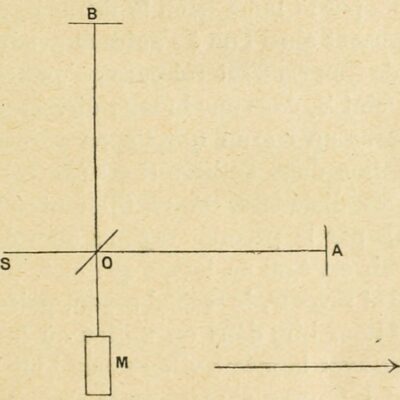
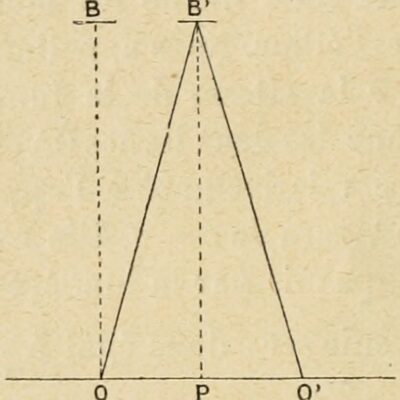
- Michelson–Morley–type experiments find no ether wind and the same light speed in all directions.
- Time dilation at particle colliders lets short-lived particles (muons, pions) survive far longer when moving near c, exactly as relativity predicts.
- GPS only works because engineers correct for both special-relativistic (velocity) and general-relativistic (gravitational) effects tied to the invariant speed and spacetime geometry.
- Astrophysical transients (gamma-ray bursts, supernova neutrinos, gravitational waves) arrive in ways that tightly constrain any deviation from a universal propagation speed for massless messengers across vast distances.
What about black holes and horizons?
A black hole’s event horizon is the ultimate expression of the speed limit. Escaping would require worldlines that cross outward faster than the outward-pointing light cones permit—i.e., faster than c. The geometry tips the cones inward; nothing, not even light, has a causal path out. Again, it’s not that a force “holds” light back; the structure of spacetime disallows the trajectory.
Could a universe have no speed limit?
Mathematically, yes: a universe with Galilean symmetry and absolute time. Physically, that is not our universe. All precise tests so far favor Lorentz symmetry with a finite invariant speed. Many speculative theories that try to modify relativity at extreme energies are strongly constrained by experiment; even tiny departures from Lorentz symmetry are hard to reconcile with observations.
Are exotic workarounds possible?
Theoretical constructs like Alcubierre “warp” metrics or traversable wormholes allow effective FTL travel within general relativity’s equations by rearranging spacetime itself. But they require exotic stress–energy (negative energy densities in macroscopic, sustained amounts) that no known physics can supply. They remain entertaining thought experiments, not engineering plans.
So, do we know “why”?
- Why there is a speed limit: Yes—because the universe is well described by Lorentz-invariant laws on a spacetime with a light-cone causal structure. A finite invariant speed protects causality and makes the laws of physics consistent for all inertial observers.
- Why the limit has the value it does: Not in a deep sense. We can define units to give it a convenient number and show that many fields necessarily move at that speed, but we do not derive its magnitude from more fundamental, dimensionless inputs. That remains part of the broader “why these constants?” puzzle in fundamental physics.
Conclusion: The universe’s speed limit isn’t an arbitrary traffic rule—it’s the way spacetime itself encodes cause and effect; that it exists is well understood, but why it takes the value we call c remains an open question.

Epistemology of experimental gravity – Scientific rationality
Explore the depths of gravitational theory and its evolution, framed through the groundbreaking methodology of Imre Lakatos.

Solaris, directed by Andrei Tarkovsky – Psychological and philosophical aspects
Discover the interplay of psychology, philosophy, and cinema in one of the greatest cinematic masterpieces of all time.

The Role of Social Media in Democracy, New Public Management and e-Governance
A vital resource for anyone interested in understanding the evolving intersection between technology and government.
Discover more from MultiMedia
Subscribe to get the latest posts sent to your email.




Leave a Reply