




One of the most common questions new authors ask is, “How long should my book be?” The honest answer is: long enough to satisfy the reader, but not so long that it becomes expensive, repetitive, or difficult to finish. The ideal length depends on genre, audience, publishing format, and whether the book will be printed, sold as an e-book, or both.

Start with word count, not page count
For authors, word count is usually more useful than page count. Page count changes depending on trim size, font, margins, spacing, images, chapter breaks, and formatting. A 50,000-word book might become 180 pages in one format and 240 pages in another. As a rough estimate, one common method is to divide the manuscript’s word count by about 275 to estimate printed pages, though this is only a planning shortcut.
For fiction, a standard novel often falls somewhere between 70,000 and 100,000 words, while 40,000 words is commonly treated as the lower threshold for a novel. Genre matters: fantasy and science fiction are often longer, mystery and thriller novels often sit around 80,000–100,000 words, and young adult novels are usually shorter.
For nonfiction, many general books fall around 50,000–80,000 words, but shorter practical books can work very well, especially when they solve a narrow problem. A focused self-help, business, how-to, or expert guide may be effective at 20,000–50,000 words if it delivers clear value without padding.
Print books need enough pages to feel substantial
Print changes the calculation because readers physically hold the book. A printed book that is too thin may feel less valuable, especially if priced like a full-length title. On the other hand, a very long print book costs more to produce, ship, and buy.
For print-on-demand authors, page count also affects production cost. Amazon KDP calculates paperback printing cost using a formula based on fixed cost plus page count multiplied by per-page cost, so longer books directly affect pricing and royalties.
There are also platform limits. On Amazon KDP, common paperback trim sizes such as 5″ × 8″, 5.5″ × 8.5″, and 6″ × 9″ generally allow 24–828 pages for black ink on white paper, 24–776 pages for black ink on cream paper, and 72–600 pages for standard color. KDP hardcovers have a narrower range: 75–550 pages. (Kindle Direct Publishing)
This means a short print book may need careful design. If your manuscript is only 15,000–20,000 words, it may look more like a booklet unless you use a smaller trim size, generous formatting, illustrations, worksheets, or added resources. That can be perfectly fine, but the positioning should be honest: “guide,” “manual,” “short introduction,” “workbook,” or “essay” may fit better than “full book.”
E-books can be shorter, but not emptier
E-books are more flexible. There is no physical spine, no paper cost, and no fixed page experience. Readers can change font size, line spacing, and screen orientation, so “pages” become less meaningful. What matters more is whether the e-book delivers what the title, description, and price promise.
This is why short e-books can succeed. A 20,000-word e-book that solves a specific problem may feel more valuable than a 70,000-word book full of filler. For example, a concise guide on setting up a newsletter, managing personal finances, publishing on KDP, or learning a software tool can be short and still useful.
However, readers still notice when a book feels incomplete. A short e-book should be focused, not underdeveloped. It should have a clear promise, a logical structure, and enough examples, explanations, or practical steps to justify the purchase.
File size can also matter for e-books, especially image-heavy books. KDP states that manuscript files above 650 MB will fail to convert, and images should generally be embedded properly and at least 300 DPI where relevant. (Kindle Direct Publishing) For Kindle e-books using the 70% royalty option, delivery costs can also affect royalties because Amazon factors file size into certain royalty calculations. (Kindle Direct Publishing)
Practical length guidelines
| Type of book | Typical target length |
|---|---|
| Short guide / lead magnet / mini e-book | 8,000–20,000 words |
| Practical how-to e-book | 20,000–50,000 words |
| General nonfiction | 50,000–80,000 words |
| Memoir | 60,000–90,000 words |
| Standard adult novel | 70,000–100,000 words |
| Thriller / mystery / romance | 70,000–100,000 words |
| Fantasy / science fiction | 90,000–120,000+ words |
| Young adult novel | 55,000–80,000 words |
These are not laws. They are expectations. A book can be shorter or longer if the content justifies it, but the farther you move from the expected range, the more carefully you need to manage reader expectations.
Print vs e-book: the key difference
For print, ask:
“Will the book feel complete, professional, and fairly priced as a physical object?”
For e-book, ask:
“Will the reader feel they received the value promised by the title and description?”
A short print book may feel too thin. A short e-book may feel efficient. A very long print book may become expensive. A very long e-book may feel overwhelming unless the reader expects depth, such as in epic fantasy, academic nonfiction, or comprehensive reference material.
The best rule: no padding, no gaps
The ideal book length is not the maximum number of words you can write. It is the length at which the book feels complete. If the book is too short, readers may feel important questions were skipped. If it is too long, they may feel the author did not edit carefully.
A useful test is this: every chapter should either advance the story, deepen the argument, solve part of the reader’s problem, or add necessary context. If a section does none of these, cut it. If a reader would need more information to understand or apply your idea, expand it.
In the end, your book should be long enough to keep its promise—and short enough that readers are glad they finished it.


The Mystery of the Golden Stars (Le mystère des étoiles d’or)
Discover this bilingual book, a thrilling adventure across the European Union!
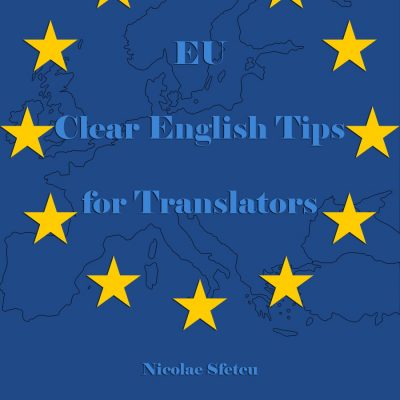
EU Clear English Tips for Translators
Make your English crystal clear—just like the EU wants it!
American Music
Dive into a comprehensive exploration of the diverse musical styles that have shaped the United States.
Discover more from MultiMedia
Subscribe to get the latest posts sent to your email.




Leave a Reply