




Oracle Corp. (NYSE: ORCL) shares came under pressure after the company reported fiscal 2026 second-quarter results that beat profit expectations but missed some key revenue and cloud forecasts, while unveiling a sharp increase in planned spending on AI-focused data centers.
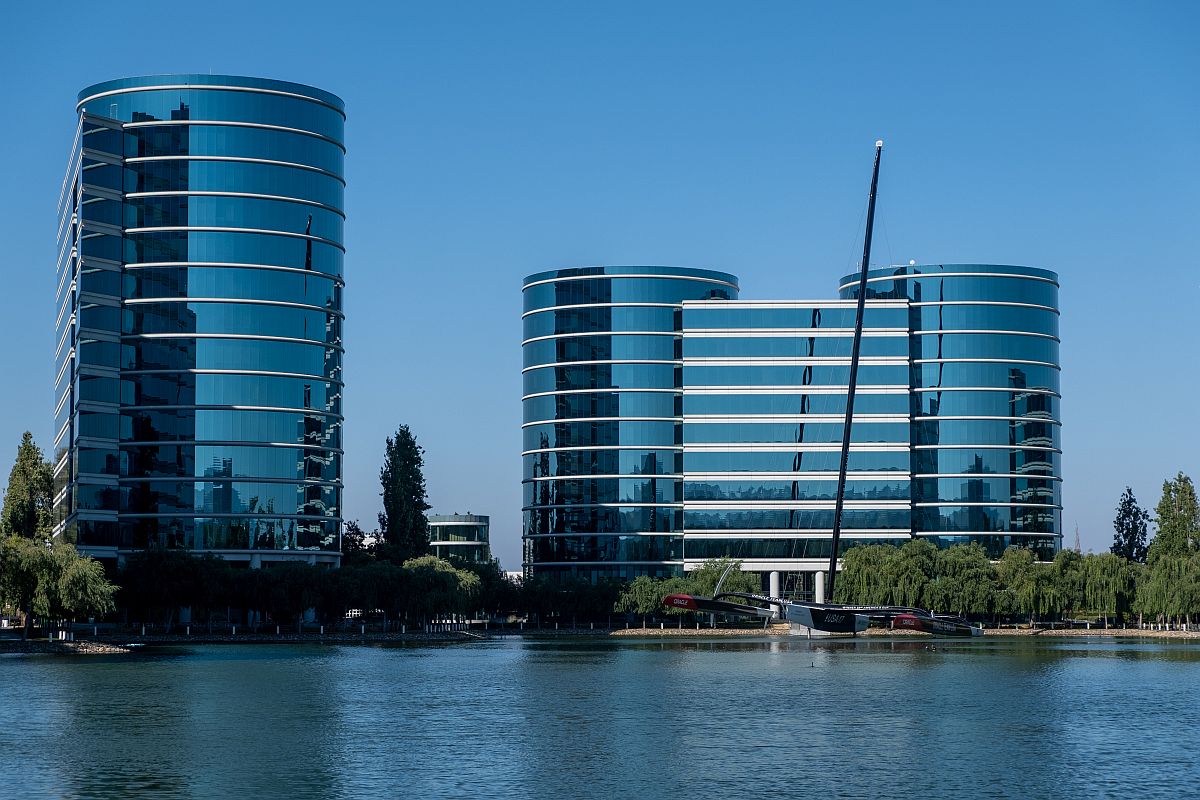
USA 17 at Oracle Corporation Headquarters
The stock dropped about 10–11% in after-hours trading on Wednesday after the announcement, as investors reacted to softer-than-hoped cloud figures and a big jump in capital expenditure guidance. (Financial Times)
Oracle reported Q2 fiscal 2026 revenue of $16.1 billion, up 14% year over year, but only roughly in line and slightly below some analyst estimates. (investor.oracle.com)
- Cloud revenue (IaaS + SaaS): $8.0 billion, up 34%
- Cloud infrastructure (IaaS): $4.1 billion, up 68%
- Cloud applications (SaaS): $3.9 billion, up 11%
Non-GAAP earnings per share came in at $2.26, well ahead of Wall Street expectations, helped by a $2.7 billion gain from the sale of Oracle’s stake in chip maker Ampere.
Oracle also highlighted a huge jump in its backlog of future business, with Remaining Performance Obligations (RPO) climbing to $523 billion, up 438% year over year, boosted by multi-year commitments from major AI customers such as Meta and Nvidia.
Despite those headline numbers, investors focused on the cost of Oracle’s AI push. The company raised its capital expenditure forecast for fiscal 2026 to about $50 billion, roughly $15 billion higher than its previous $35 billion plan, largely to fund new cloud data centers geared to AI workloads.
In the most recent quarter alone, capital spending reached around $12 billion, well above analyst expectations, while Oracle’s long-term debt climbed to just under $100 billion, heightening concern about how quickly these AI investments will pay off.
Analysts noted that while AI-related cloud demand remains strong, the mix is pressuring margins and free cash flow, and the company’s forward guidance for revenue and earnings did not fully reassure markets. Several reports pointed to worries about an “AI bubble” and Oracle’s reliance on a small number of very large customers.
Investors will be watching:
- Cloud growth vs. profitability: Can Oracle maintain high double-digit cloud growth while stabilizing margins?
- Capex efficiency: Whether the expanded $50 billion data-center plan starts to translate into faster revenue and cash-flow growth.
- AI customer concentration: How dependent Oracle remains on a handful of mega-contracts with AI players like Nvidia, Meta and OpenAI.
For now, the market reaction shows that even with strong reported earnings and a record backlog, Oracle must convince investors that its aggressive AI infrastructure bet will deliver sustainable returns rather than just a bigger bill.
Discover more from MultiMedia
Subscribe to get the latest posts sent to your email.


Leave a Reply