




 ChatGPT is an artificial intelligence assistant developed by OpenAI, capable of understanding instructions written in natural language and generating answers, explanations, texts, analyses, and other types of content. Unlike traditional computer programs, where users must select precise commands or functions, ChatGPT can be used almost like an ordinary conversation.
OpenAI defines ChatGPT as a conversational AI assistant that can help users think, write, and solve problems by understanding natural language and generating responses in real time.
Where Does the Name ChatGPT Come From?
The name combines two elements:
Chat indicates that the system was designed for conversational interaction.
GPT stands for Generative Pre-trained Transformer — a family of artificial intelligence models capable of generating content based on complex statistical patterns learned from very large amounts of information.
“Generative” refers to the ability to generate new content, “Pre-trained” means that the model is trained in advance on large quantities of data, while “Transformer” refers to the neural network architecture underlying this type of model.
ChatGPT was publicly introduced by OpenAI on November 30, 2022, initially as an experimental conversational system. One of its important characteristics from the beginning was its ability to continue a dialogue, answer follow-up questions, and take the context of the conversation into account.
How Does ChatGPT Work?
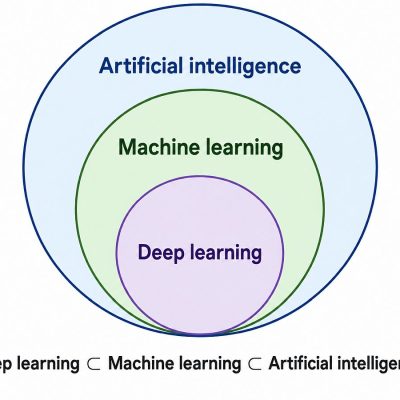
ChatGPT is based on large language models, commonly known as LLMs — Large Language Models.
During the training process, these models analyze very large quantities of information and identify relationships and regularities in language and other types of data. When generating an answer, the model successively estimates which element is most appropriate to follow in a given context.
OpenAI explains that its models learn patterns from large volumes of information, including text, images, audio, and video, analyzing relationships between elements in these data in order to generate responses later.
However, this should not be confused with simply searching a database. ChatGPT does not normally select a memorized sentence for each question. Instead, it constructs a new response according to the user’s request and the context.
For example, a user may ask:
“Explain the theory of relativity to a 12-year-old student.”
They may then continue:
“Now explain the same thing to a physics student.”
ChatGPT can adapt the level of explanation without requiring the user to restate the entire problem.
What Can ChatGPT Do?
ChatGPT can be used in a very wide range of areas. Some of the most common uses include:
- answering questions and explaining concepts;
- writing and rewriting texts;
- summarizing documents;
- translating between different languages;
- generating ideas;
- assisting with programming;
- analyzing information and solving problems;
- preparing educational materials;
- analyzing documents and files;
- assisting with professional and administrative tasks;
- generating and analyzing images;
- researching topics;
- carrying out complex, multi-step tasks.
These capabilities may vary depending on the ChatGPT version, the user’s plan, account configuration, and the tools available.
Therefore, ChatGPT can be used for a simple question such as:
“What is the difference between a virus and a bacterium?”
as well as for much more complex requests:
“Compare the main philosophical theories of personal identity and create a table with authors, arguments, and the main objections.”
ChatGPT and Internet Access
An important distinction must be made between information learned during the model’s training and information obtained in real time.
When it has access to web search, ChatGPT can search for up-to-date information on the internet and provide answers based on recent sources. This ability is particularly important for news, political information, sports results, prices, legislation, technological developments, and other fields that change frequently.
In such situations, ChatGPT becomes somewhat similar to a search engine, but the way it is used is different: users can directly request a synthesis, comparison, or explanation instead of consulting numerous individual web pages.
ChatGPT Is More Than Just a Chatbot
At first, ChatGPT was mainly known as a program that received text and generated text.
The concept has evolved considerably since then.
Depending on the version and the tools available, ChatGPT can work with text, documents, images, and other types of information. It can also use additional tools for search, analysis, and more complex tasks.
From this perspective, it is more appropriate to consider ChatGPT a general-purpose AI assistant, rather than merely a chatbot.
What Is a Prompt?
The instruction sent to ChatGPT is commonly called a prompt.
A prompt can be very simple:
“What is photosynthesis?”
But it can also include detailed instructions:
“Explain photosynthesis in an article of about 800 words for high school students, using examples and avoiding complicated formulas.”
In general, the more clearly the user specifies what they want, the relevant context, the intended audience, and the desired output format, the more closely ChatGPT can produce a result that matches their intention.
Using artificial intelligence effectively therefore depends not only on the system’s ability to answer, but also on the user’s ability to formulate the problem clearly.
ChatGPT Can Make Mistakes
One of the most important rules when using ChatGPT is that its answers should not automatically be considered correct.
An AI model may sometimes generate incorrect information, misunderstand a question, or confidently present a statement that is not supported by reality.
For this reason, important information should be verified, especially in areas such as:
- medicine;
- law;
- finance;
- scientific research;
- controversial historical information;
- statistical data;
- very recent information.
In such situations, it is advisable to request and consult original sources as well.
ChatGPT Does Not “Think” Exactly Like a Human
The fluent way in which ChatGPT communicates can create the impression that there is a person thinking behind the screen. However, it is important to distinguish between the linguistic behavior of an AI system and human thought or consciousness.
ChatGPT is a computer system based on artificial intelligence models. It can perform complex reasoning, identify relationships between pieces of information, and produce highly elaborate explanations, but these results are generated through computational processes.
The fact that a response may use expressions such as “I think,” “I believe,” or “I understand” should not automatically be interpreted as evidence that the system possesses human experiences or feelings.
ChatGPT as a Working Tool
One of the most effective ways to use ChatGPT is as an intellectual collaborator.
Instead of simply asking it to provide a final answer, we can use it for:
- exploring a problem;
- identifying arguments for and against;
- developing an idea step by step;
- criticizing a text;
- checking the logic of an argument;
- reorganizing information;
- finding alternatives;
- preparing a first draft that will later be reviewed by a human.
In this context, artificial intelligence does not replace the user, but can enhance their productivity and analytical capabilities.
For example, a researcher can use ChatGPT to organize a bibliography or clarify concepts, a teacher can use it to prepare educational materials, a programmer can use it to analyze code, while an author can use it to structure and revise a manuscript.
ChatGPT and the Future of Human–Computer Interaction
The emergence of ChatGPT also marks an important change in the way people can interact with computer systems.
For a long time, users had to learn the language of computers: commands, menus, syntax, or programming languages. Conversational artificial intelligence partially reverses this relationship: the computer tries to understand human language.
This change makes advanced digital tools accessible even to people without specialized technical training.
At the same time, it creates new challenges related to the accuracy of information, copyright, data protection, education, security, responsibility, and the role of humans in activities assisted by artificial intelligence.
Conclusion
ChatGPT is much more than a program that answers questions. It is a conversational interface to advanced artificial intelligence systems through which users can generate and analyze information, write texts, program, conduct research, learn, create, and solve problems.
Its main strength lies in the ability to communicate through natural language and adapt its results to the user’s context and requirements.
At the same time, ChatGPT is not infallible. Its outputs must be critically evaluated, and important information should be verified.
Therefore, the relevant question is no longer simply “What can ChatGPT do?”, but also “How can we learn to collaborate effectively and responsibly with such a system?”
As artificial intelligence continues to develop, the ability to formulate good questions, verify answers, and integrate AI tools into one’s own activities will likely become an increasingly important skill in education, research, business, and everyday life.
Discover more from MultiMedia
Subscribe to get the latest posts sent to your email.




Leave a Reply