





Digital marketing is the practice of promoting products, services, or ideas using internet-connected channels. Instead of relying on billboards, TV, or print alone, digital marketing meets people where they spend their time: search engines, social media, email, websites, apps, and connected devices. Done well, it blends data, creativity, and technology to attract the right audience, earn their trust, and turn attention into revenue.
Why It Matters
- Attention lives online. People research, compare, and buy on their phones and laptops.
- It’s measurable. You can see who clicked, what they did, and what it cost—then improve.
- It scales. Campaigns can reach a neighborhood or the whole world with the same toolkit.
- It’s personal. Messages can adapt to a person’s interests, location, and stage in the journey.
Core Channels (and what they’re good for)
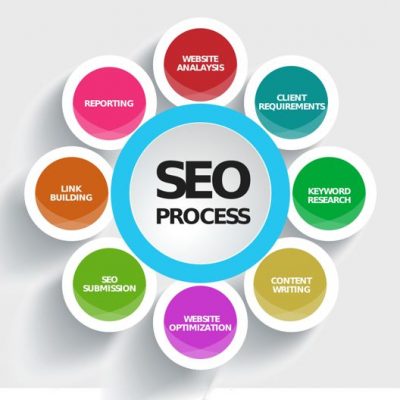
- Search Engine Optimization (SEO): Optimizing your site to rank in organic search results. Great for compounding, high-intent traffic.
Example: An in-depth guide helps your page rank for “best hiking backpacks,” sending steady, free visitors. - Search Engine Marketing (SEM / PPC): Paid ads on search engines (e.g., Google Ads). Excellent for capturing demand right when users are searching.
Example: Bidding on “emergency plumber near me” for immediate leads. - Social Media Marketing: Organic and paid content on platforms like Instagram, TikTok, LinkedIn, X, and Facebook. Ideal for awareness, community, and product discovery.
Example: Short videos showcasing product use cases, promoted to lookalike audiences. - Content Marketing: Creating blogs, videos, podcasts, ebooks, and tools that inform or entertain. Builds authority and fuels other channels.
Example: A mortgage calculator that earns backlinks and email sign-ups. - Email & Marketing Automation: Nurturing relationships via newsletters, lifecycle sequences, and triggered messages. High ROI when segmented well.
Example: A welcome series that educates new subscribers and offers a first-purchase discount. - Display & Programmatic Advertising: Visual ads across sites and apps. Useful for retargeting and broad awareness.
Example: Showing ads to visitors who added to cart but didn’t buy. - Affiliate & Influencer Marketing: Partners promote your product for a fee or commission. Strong for trust and niche reach.
Example: A creator’s “day in the life” video featuring your product with a tracked link. - Conversion Rate Optimization (CRO): Improving on-site experiences (copy, design, speed, UX) to convert more visitors into leads or customers.
Example: A/B testing your product page to increase add-to-cart rate.
How Digital Marketing Works (in a nutshell)
Think of it as a funnel:
- Awareness: People discover you (ads, social, PR, SEO).
- Consideration: They compare and research (content, reviews, emails).
- Conversion: They take action (purchase, demo, signup).
- Loyalty & Advocacy: They return and refer (retention emails, communities, loyalty programs).
Your job is to remove friction at each stage and move people forward with the right message at the right moment.
A Simple Strategy Framework
- Clarify goals and constraints
- What does success look like? (e.g., 500 qualified leads/month, 4% e-commerce conversion, CAC < €50)
- Budget, timeline, and resources (team, tools, content capacity).
- Know your audience
- Who are they? What hurts? Where do they hang out online?
- Map key moments (“jobs to be done”) and decision triggers.
- Choose your channels
- Start where intent is highest (often SEO/SEM) and add social/content for scale and trust.
- Don’t spread too thin; win a few channels before expanding.
- Craft offers and messages
- Clear value proposition, proof (reviews, case studies), and a meaningful call to action.
- Align offers to funnel stages (e.g., ebook for awareness, free trial for conversion).
- Build the journey
- Landing pages matched to ads.
- Email sequences for new leads and new buyers.
- Retargeting for visitors who didn’t convert.
- Measure and iterate
- Implement analytics and conversions tracking (events, goals, pixels).
- Review weekly: what’s working, what’s not, what will you test next?
Metrics That Matter
- Traffic & Visibility: Impressions, sessions, share of search.
- Engagement: CTR (click-through rate), time on page, bounce rate, video completion.
- Conversion: CVR (conversion rate), cost per acquisition (CPA), customer acquisition cost (CAC).
- Revenue Quality: Average order value (AOV), lifetime value (LTV), payback period.
- Efficiency: ROAS (return on ad spend), marketing ROI, contribution margin.
Quick formulas:
- CTR = Clicks ÷ Impressions
- CVR = Conversions ÷ Clicks
- ROAS = Revenue ÷ Ad Spend
- CAC = Total Marketing & Sales Cost ÷ New Customers
Budgeting (without guesswork)
- Bottom-up: Estimate volume × cost per action per channel; prioritize the best payback.
- Guardrails: Target CAC ≤ 1/3–1/5 of LTV for healthy unit economics.
- Mix: Reserve ~70% for proven channels, ~20% for scaling tests, ~10% for wildcards/innovation.
Common Mistakes (and fixes)
- Sending ad clicks to the homepage.
Fix: Use focused landing pages that match the keyword/ad promise. - Measuring everything, learning nothing.
Fix: Define a small set of North Star metrics and a weekly testing cadence. - Ignoring mobile UX.
Fix: Design for small screens first; improve speed and checkout simplicity. - Buying traffic before nailing the offer.
Fix: Test your value prop and pricing with small experiments before scaling spend. - One-size-fits-all messaging.
Fix: Segment by intent, behavior, and lifecycle stage.
B2B vs. B2C Nuances
- B2B: Longer sales cycles, multiple stakeholders, heavy on educational content, webinars, case studies, and LinkedIn. Lead quality and pipeline velocity matter more than raw volume.
- B2C: Shorter cycles, visual storytelling, social proof, and frictionless checkout. AOV and repeat purchase rate drive profitability.
Tools You’ll Likely Use
- Analytics & Attribution: Google Analytics, Mixpanel; ad platform pixels/conversions.
- Ad Platforms: Google Ads, Meta Ads, TikTok Ads, LinkedIn Ads.
- Email & Automation: HubSpot, Mailchimp, Klaviyo, Customer.io.
- SEO & Content: Search Console, Ahrefs/SEMrush, a CMS (e.g., WordPress, Webflow).
- CRO & UX: Hotjar/Clarity (heatmaps), Optimizely/VWO (experiments), PageSpeed tools.
(Choose only what you’ll actually use; tools don’t replace strategy.)
A 30-Day Starter Plan
Week 1: Foundation
- Clarify goals and ICP (ideal customer profile).
- Install analytics, pixels, and set up conversion events.
- Audit website for speed, messaging, and mobile UX.
Week 2: Fast Wins
- Launch a focused PPC campaign on 1–2 high-intent keywords.
- Create a matching landing page with one clear CTA.
- Set up a simple welcome email series and basic retargeting.
Week 3: Content & SEO
- Publish two authoritative pieces answering top buyer questions.
- Add internal links and on-page SEO (titles, meta, headers).
- Collect initial reviews/testimonials and feature them prominently.
Week 4: Optimize & Scale
- Review search term reports; add negatives, refine bids.
- A/B test the landing page headline/CTA.
- Identify what to double down on next month.
Privacy, Compliance & Trust
- Consent and transparency: Follow GDPR/CCPA where applicable; get clear opt-in for email.
- First-party data strategy: Encourage account creation and email subscriptions to reduce reliance on third-party cookies.
- Value exchange: Give users a reason to share data (useful content, perks, better service).
The Future (trends to watch)
- AI-assisted creative & targeting: Faster content production and micro-segmentation—still needs human oversight.
- Measurement in a privacy-first world: More modeled conversions and MMM (media mix modeling) alongside last-click.
- Shoppable everything: Social commerce and native checkout compressing the funnel.
- Owned audiences: Email, SMS, and communities as defensible assets.
Quick Glossary
- Attribution: Determining which touchpoints get credit for a conversion.
- Lookalike audience: A paid social feature that finds people similar to your best customers.
- Retargeting/Remarketing: Ads to people who interacted with you but didn’t convert.
- Lead magnet: Free value (ebook, template, trial) offered in exchange for contact info.
- UTM parameters: Tracking tags added to URLs to measure campaign performance.
Bottom Line: Digital marketing is less about chasing the newest platform and more about matching audience, message, and moment—then testing relentlessly. Start with clear goals, pick a few channels that fit your buyer’s intent, build a smooth path to conversion, measure what matters, and keep iterating. Do that consistently, and the compounding effects can transform your growth.


Small Business Management for Online Business
Master the Art of Growing Your Online Enterprise. Discover the Secrets to Online Success!

How to… Marketing for Small Business
Unlock Your Business Potential – Get Your FREE Marketing Guide Today!

Internet Marketing, SEO and Advertising
This book combines practical experience with research-based insights, organizing everything into one easy-to-understand resource.
Discover more from MultiMedia
Subscribe to get the latest posts sent to your email.


Leave a Reply