




Search Engine Optimization (SEO) is the practice of improving a website so that search engines can discover, understand, and recommend it to people who are looking for what you offer. In plain English: SEO helps your pages show up (and rank higher) on search engine results pages (SERPs) for the right searches.
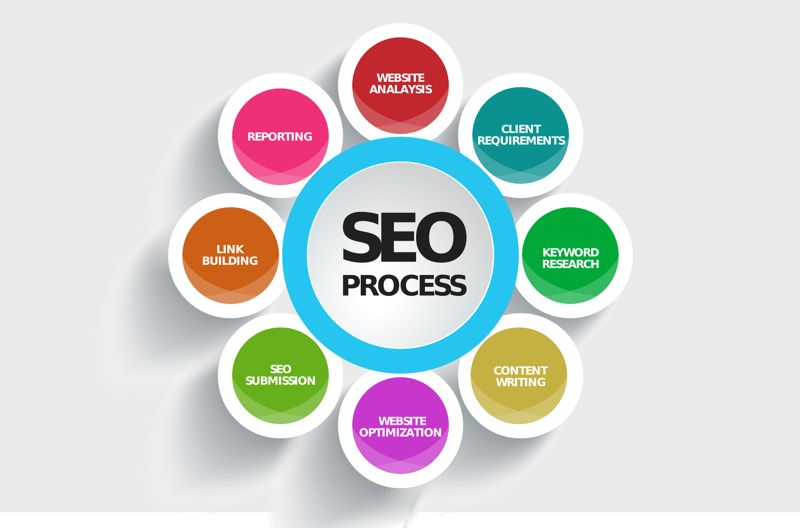
How Search Engines Work (in 60 seconds)
- Crawling
Automated bots (often called crawlers or spiders) browse the web by following links and sitemaps to find pages. - Indexing
Discovered pages are analyzed and stored in a massive database (the index). Content, media, metadata, structured data, and context are recorded. - Ranking
When someone searches, the engine evaluates billions of indexed pages to return the most relevant, useful, and trustworthy results, fast.
Search engines use hundreds of signals. You can’t optimize for a single “secret factor,” but you can align your site with what engines and humans both value: relevance, quality, and credibility.
The Three Pillars of SEO
1) On-Page SEO (Relevance)
Everything you control on a page to help search engines and users understand it.
- Map search intent (informational, transactional, navigational, local).
- Use clear topics and keywords naturally in:
- Title tag & H1
- Subheadings (H2–H3)
- Intro paragraph
- Image alt text (when helpful)
- Meta description (for clicks, not rankings)
- Provide comprehensive, helpful content that answers the query better than alternatives.
- Improve internal linking so related pages reinforce each other.
- Make URLs short and descriptive (
/pricing,/best-running-shoes).
2) Technical SEO (Access & Experience)
Ensure search engines can crawl and index your content—and users get a fast, smooth experience.
- Crawlability: clean robots.txt, valid XML sitemaps, fix broken links.
- Indexability: correct canonical tags, avoid duplicate content issues.
- Site speed & performance: optimize images, script loading, caching.
- Mobile-friendliness & UX: responsive design, legible fonts, accessible UI.
- Structured data (schema): help engines understand entities (e.g., articles, products, FAQs).
- Security: HTTPS everywhere.
3) Off-Page SEO (Authority)
Signals that your site is trusted by others.
- Backlinks from relevant, reputable sites (earned via great content, partnerships, PR, digital outreach).
- Brand mentions and consistent NAP (Name, Address, Phone) for local businesses.
- Reviews and overall brand reputation.
How SEO Actually Works Day-to-Day
- Research the audience & intent
Talk to customers, study search queries, and group them into themes (e.g., “how-to,” “compare,” “near me”). - Build a content map
Match each theme to a page: one primary topic per page, plus supporting articles. Avoid keyword cannibalization. - Create outstanding content
Prioritize usefulness: demonstrations, data, visuals, examples, FAQs, and next steps. Keep it readable and skimmable. - Optimize the page
- Craft a compelling title tag (~50–60 chars) and meta description that earns clicks.
- Use structured headings, descriptive media, internal links, and clear calls to action.
- Add schema where applicable (FAQ, Product, HowTo, Article).
- Fix technical friction
Improve speed, ensure proper canonicals, remove or noindex thin/duplicate pages, and monitor crawl errors. - Promote & earn authority
Share with communities, partners, newsletters, and journalists. Build relationships that lead to natural links. - Measure & iterate
Track impressions, clicks, rankings, conversions, and engagement. Update and consolidate content as needed.
Key Ranking Concepts (Simplified)
- Relevance: Does your page clearly match the searcher’s intent and topic?
- Quality: Is it accurate, complete, and trustworthy (expertise, citations, clarity)?
- Experience: Is the page fast, mobile-friendly, and easy to use?
- Authority: Do credible sites reference or link to you?
- Engagement: Do searchers click and stay because you satisfy their query?
Specializations of SEO
- Local SEO: Optimize your Google Business Profile, NAP consistency, local citations, location pages, and reviews.
- E-commerce SEO: Faceted navigation, pagination, product schema, unique product copy, and scalable internal linking.
- International SEO: Hreflang, localized content, and market-specific keyword research.
- News/Publisher SEO: Structured data, freshness, bylines, and site speed.
- Programmatic SEO: Safely scaling templated pages with tight quality controls.
Metrics That Matter
- Visibility: Impressions, average position for priority queries.
- Traffic: Organic sessions and click-through rate (CTR).
- Engagement: Time on page, bounce/return-to-SERP patterns (directionally).
- Outcomes: Leads, sales, sign-ups, revenue from organic.
- Health: Crawl errors, index coverage, Core Web Vitals, backlink profile.
Common SEO Myths (and Quick Reality Checks)
- “Stuff more keywords = higher rankings.”
Over-optimization hurts readability and can backfire. Aim for clarity and completeness, not density. - “Links don’t matter anymore.”
Links still convey authority—focus on quality and relevance, not volume. - “SEO is set-and-forget.”
Queries evolve, competitors publish, and sites change. Refresh and improve content over time. - “Longer content always wins.”
Length helps only if it adds value. Satisfy intent with the right amount of detail.
A Simple SEO Checklist
- Identify primary intent and target topic/keywords.
- Write a unique, compelling title tag and meta description.
- Use clear headings, descriptive URLs, and internal links.
- Cover the topic thoroughly; answer related FAQs.
- Compress images, lazy-load media, and test mobile UX.
- Add relevant schema markup.
- Publish, promote, and earn links naturally.
- Monitor performance and improve regularly.
Getting Started (Today)
- List your top 5 customer questions—make one page for each.
- Optimize those pages’ titles, intros, headings, and internal links.
- Fix obvious technical blockers (speed, broken links, missing HTTPS).
- Share your content with communities and partners who’ll genuinely benefit.
SEO isn’t magic; it’s systematic alignment between what people need, what your content delivers, and how easily search engines can prove and present that value. Do that consistently, and rankings, traffic, and revenue follow.


Web 2.0 / Social Media / Social Networks
Unlock the Power of Digital Connection

How to… Marketing for Small Business
Unlock Your Business Potential – Get Your FREE Marketing Guide Today!

Small Business Management for Online Business
Master the Art of Growing Your Online Enterprise. Discover the Secrets to Online Success!
Discover more from MultiMedia
Subscribe to get the latest posts sent to your email.


Leave a Reply