




Artificial intelligence (AI) is the science and engineering of creating machines and software that can perform tasks that normally require human intelligence. That means things like understanding language, recognizing faces, making decisions, solving problems, or even creating art and music.
Let’s break it down in a clear, human way.
When we say a system is “intelligent,” we don’t mean it thinks or feels like a person. In AI, intelligence usually refers to the ability to:
- Perceive (see or listen to data: images, sound, text, numbers)
- Reason (draw conclusions, find patterns, predict outcomes)
- Learn (improve over time using data and experience)
- Act (make decisions or take actions toward a goal)
If a computer system can do some of these in a useful way, we often call it artificial intelligence.
A very short history of AI
AI didn’t appear suddenly — it’s been developing for decades:
- 1950s–1960s: Early ideas. Alan Turing asks, “Can machines think?” and proposes the Turing Test. Simple programs can play checkers and solve puzzles.
- 1970s–1990s: Progress and setbacks. AI could solve some narrow problems (like chess) but struggled with real-world complexity. People called this period “AI winters” when interest and funding dropped.
- 2000s–2010s: Big data + faster computers. Machines learn from massive amounts of data (images, text, clicks) using machine learning, especially deep learning (neural networks with many layers).
- 2020s: Everyday AI. Translation, voice assistants, recommendation systems, self-driving features, content generation (text, images, code) all powered by AI.
Types of AI
You’ll often see AI grouped in a few different ways.
1. Narrow vs. General AI
- Narrow AI (Weak AI)
Systems that are good at one specific task.
Examples: a spam filter, a face recognition system, a chess engine.
Almost all AI we use today is narrow. - General AI (Strong AI)
A hypothetical system that can understand, learn, and perform any intellectual task a human can do, at a similar or better level.
This does not exist today. It’s a research goal and also a topic of debate and science fiction.
2. Reactive, Limited Memory, and more
Sometimes AI is also described by what it can remember or understand:
- Reactive machines: Just respond to the current input, with no memory. (Very simple systems.)
- Limited memory: Learn from past data to improve decisions. Most modern AI is like this (e.g., self-driving systems learning from past driving data).
- Theory of mind / self-aware: More advanced, hypothetical levels where AI would understand emotions or have self-awareness. These are not current technology.
How does AI work?
There are many methods, but here are the big ideas.
1. Rules and logic (the old-school way)
Early AI used hand-crafted rules:
- “If the customer bought X and Y, recommend Z.”
- “If temperature < 0°, then turn on heater.”
This is called symbolic AI or rule-based systems. It can work well in simple, clearly defined situations, but it doesn’t scale easily to messy real-world data.
2. Machine learning (the modern core of AI)
Most modern AI uses machine learning (ML).
Instead of giving the computer rules, we give it data and let it learn the rules by itself.
Basic idea:
- Collect data (emails labeled spam/not spam, cat vs. dog photos, past sales, etc.)
- Feed it to a learning algorithm.
- The algorithm adjusts internal parameters to make better predictions.
- Over time, it becomes good at tasks like:
- “Is this email spam?”
- “Is this image a cat or a dog?”
- “What’s the likely price of this house?”
3. Deep learning and neural networks
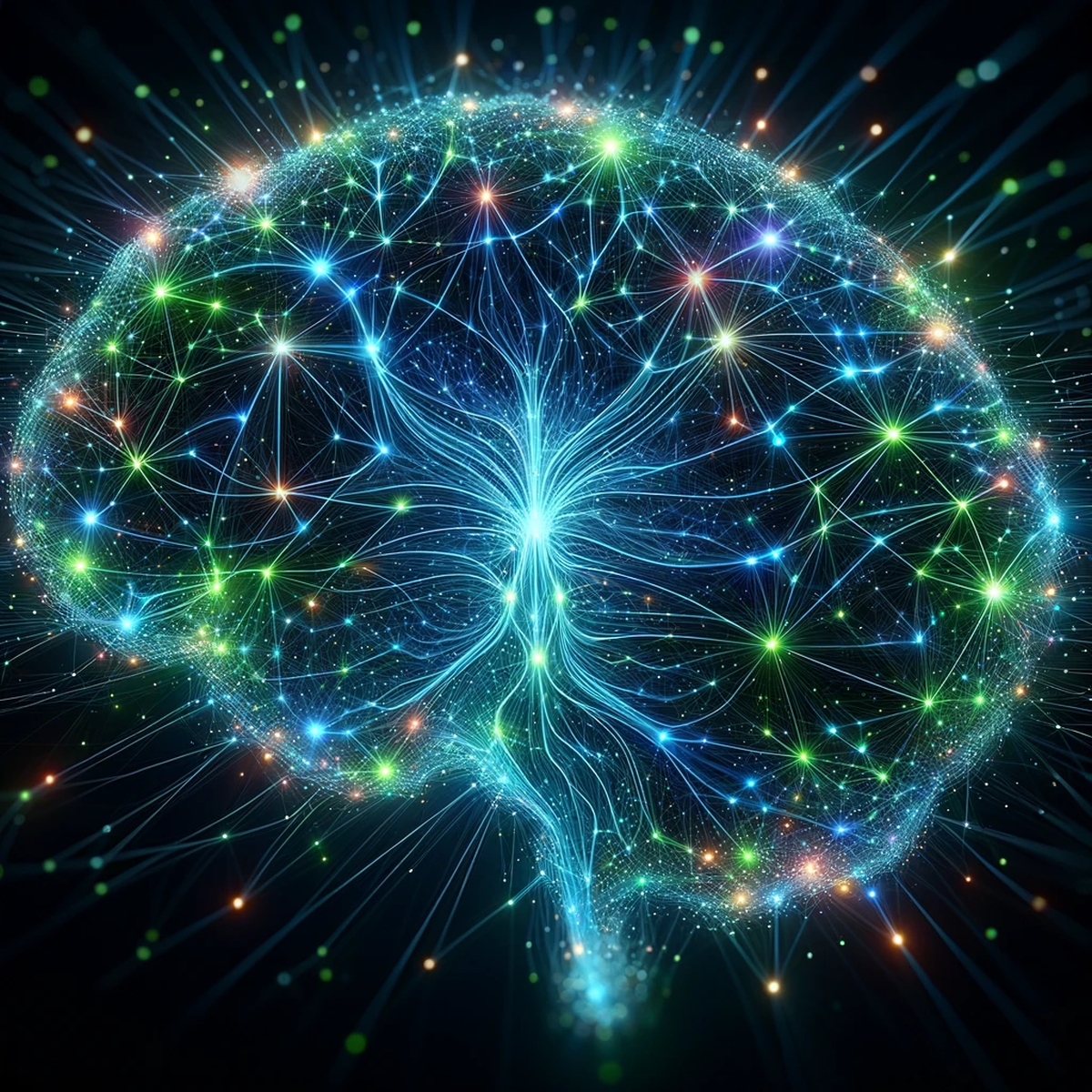
Deep learning is a type of machine learning that uses neural networks with many layers, loosely inspired by the brain.
- Each layer transforms the data a bit (e.g., from pixels → edges → shapes → objects).
- With enough data and layers, deep learning can handle complex tasks: speech recognition, image understanding, language modeling, and more.
This is the technology behind things like:
- Voice assistants
- Advanced translation systems
- Large language models (like the one you’re chatting with)
- Image generators
- Many recommendation systems
Examples of AI in everyday life
You interact with AI more than you might realize:
- On your phone:
- Face unlock
- Predictive text and autocorrect
- Voice assistants (“Hey Google”, “Siri”, etc.)
- Online:
- Recommendation systems (YouTube, Netflix, TikTok, Spotify, shopping)
- Targeted ads
- Spam filters in email
- Chatbots and virtual customer support
- Around you:
- Navigation apps that choose the best route
- Fraud detection on your credit card
- Smart home devices (thermostats, cameras, speakers)
- Driver-assistance systems in cars (lane keeping, automatic braking)
- In specialized fields:
- Medical diagnosis support (analyzing scans or patterns in health data)
- Industrial robots in factories
- Financial trading algorithms
What AI is not
It’s helpful to clear up some common misunderstandings:
- AI is not magic.
It’s math, data, and algorithms. Sometimes very complex, but not mystical. - AI does not “understand” the world like humans do.
It can recognize patterns very well but doesn’t have human consciousness, feelings, or life experience. - AI is not automatically correct or fair.
It learns from data. If the data is biased or incomplete, its outputs can also be biased or wrong.
Benefits of AI
When used well, AI can bring big advantages:
- Efficiency: Automates repetitive or tedious tasks.
- Accuracy: Can sometimes detect patterns humans miss (e.g., subtle signs in medical images).
- Personalization: Tailors experiences based on your preferences (recommendations, learning apps).
- Scale: Handles massive amounts of data and tasks that would be impossible manually.
Risks and challenges of AI
AI also comes with real concerns that people are working to address:
- Bias and fairness:
If training data reflects human biases, AI can reinforce them (e.g., in hiring, lending, policing). - Privacy:
AI often relies on large datasets, which can involve personal information. - Misinformation:
AI can generate realistic text, images, audio, and video, which can be misused (e.g., deepfakes). - Job impact:
Some tasks and roles may be automated, changing the job market and requiring reskilling. - Safety and control (long-term):
Researchers are studying how to make powerful AI systems robust, predictable, and aligned with human values.
So, AI is the field of creating systems that can perceive, learn, reason, and act—using data and algorithms—to perform tasks that usually require human intelligence.
Discover more from MultiMedia
Subscribe to get the latest posts sent to your email.





Leave a Reply