




The game of bridge is one of the best-known and most complex card games in the world. At first glance, it may seem difficult because it involves rules, a specific vocabulary, and many possible lines of play. In reality, bridge is learned gradually, and its fundamental principles are easy to understand when they are presented in a natural order.
Bridge is not a game based only on luck. The deal of the cards is random, but the result depends largely on how players evaluate the cards they receive, communicate through the auction, build a plan, and make decisions during the play. For this reason, bridge is often regarded as a game of logic, memory, cooperation, and imagination.
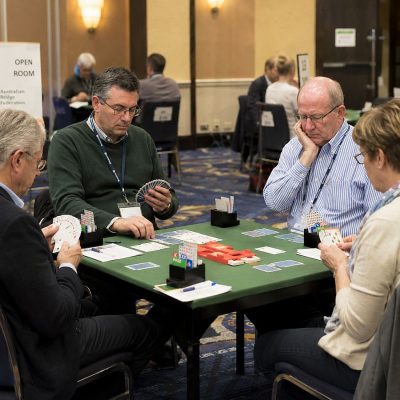
A game of bridge is normally played by four people seated around a table. The players form two partnerships, and the members of each partnership sit opposite one another. One partnership plays against the other. Each player receives 13 cards from a standard 52-card deck.
During a deal, the players first try, through the auction, to establish a contract. The contract states how many tricks one partnership undertakes to win and whether the hand will be played with a particular suit as trumps or without trumps. After the auction ends, the actual play of the cards begins.
These ideas will be explained in detail in the following chapters. For the moment, it is important to understand the general nature of the game and the reasons why bridge continues to attract millions of people.
A Game of Cards, Logic, and Cooperation
Bridge belongs to the family of trick-taking games. A trick consists of four cards, one played by each participant. Normally, the trick is won by the highest card in the suit that was led, except when a trump suit is being used.
In bridge, the rank of the cards, from highest to lowest, is:
ace, king, queen, jack, 10, 9, 8, 7, 6, 5, 4, 3, 2.
The suits are:
- spades;
- hearts;
- diamonds;
- clubs.
The word “suit” does not refer here to red or black, but to the four categories of cards in the deck.
At the beginning of each deal, the cards are shuffled and distributed at random. Each player receives 13 cards. From this point of view, luck plays a certain role: a player may receive a strong hand or a weak hand, many cards in one suit, or a balanced distribution.
However, luck is not enough to win. A player must know how to use what has been dealt. A modest hand may become very valuable when it fits well with the partner’s hand, while a hand containing many high cards may be misused if it is not evaluated and bid correctly.
Bridge is, above all, a game of decisions. At every stage, questions arise:
- How strong is my hand?
- What information should I give my partner?
- What contract is realistic?
- Which card should I play?
- What cards might the opponents hold?
- What is the safest way to make the contract?
- How can I prevent the opposing partnership from winning the tricks it needs?
The answers are not always obvious. Sometimes several options are available, and the player must choose the one that offers the best chance of success.
At the same time, bridge is a game of incomplete information. Each player can see only their own cards. They do not know exactly what cards the other participants hold. They must infer the distribution from the auction, the cards already played, and the logical actions of the opponents.
An experienced player does not simply guess. Information is collected step by step. The player notices who bid a particular suit, who failed to follow suit, which honors have appeared, and which cards are still missing. In this way, the unseen hands gradually begin to take shape.
Memory is useful, but bridge does not necessarily require an exceptional memory. More important is the ability to organize information. A beginner can start with a few simple questions:
- How many trumps are still outstanding?
- Which high cards have not yet been played?
- What is the opponents’ long suit?
- How many more tricks are needed?
With time, this analysis becomes faster and more natural.
The essential feature of bridge, however, is cooperation between partners. The two players in a partnership pursue the same objective, but they are not allowed to show one another their cards or discuss them freely. Communication takes place through the calls made during the auction and, within certain limits, through the cards played.
The auction can be regarded as a language. When a player bids a suit or notrump, that player is not merely proposing a possible contract, but also giving information about the strength and distribution of the hand. The partner interprets the message and responds according to the rules of the bidding system agreed upon by the partnership.
For example, a particular bid may show that the player has enough points to open the auction and at least five cards in a major suit. The partner cannot see the cards, but can use this information to decide whether to support the suit, bid another suit, or suggest a notrump contract.
Cooperation continues during the defense. The two defenders must work together to prevent declarer from making the contract. They may exchange information through their choice of cards, using agreed signaling methods. These signals are not secret and must comply with the rules of the game.
Bridge is therefore a partnership game. It is not enough for one player to be very strong individually. The player must understand the partner, use the same conventions, and trust the information received.
One of the first important lessons of bridge is that your partner is not your opponent. A mistake made by the partner should not be criticized at the table. A partnership improves when the players analyze situations calmly and try to understand the cause of an unsuccessful decision.
Discover more from MultiMedia
Subscribe to get the latest posts sent to your email.



Leave a Reply