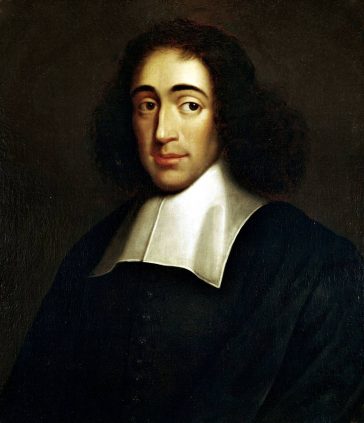
Philosophy of the 14th century: Duns Scotus (2)

|

Duns Scotus also seems to abandon the principle of universal analogy which, for Bonaventure and even for Saint Thomas, was the great driving force of continuity. By declaring that Being has a univocal and not equivocal meaning with regard to … Read More

The Epicurean Canonical

|

Epicurus,” says Cicero, “has many very brilliant words; but he hardly cares to remain in agreement with himself.” (6) His philosophy is in fact one of those which proceeds by discrete and separate evidences, each of which is sufficient in … Read More

Is a new ”AI winter” coming?

|

The field of artificial intelligence (AI) has enjoyed a renaissance over the past decade, marked by groundbreaking advances in machine learning, natural language processing, and generative AI. From AI-powered chatbots to self-driving cars, the technology has captivated industries and investors … Read More

Aristotle, Organon – Topics: on dialectic

|

Aristotle is the inventor of formal logic, that is to say of that part of logic which gives rules of reasoning independent of the content of the thoughts on which one reasons. But, despite appearances, the logical writings gathered under … Read More

Mathematical notations in physics

|

Physics is a science that is essentially based on measurement and modeling. The physicist’s background must therefore contain the tools and methods that allow him to: derive rational information from his measurements. approach the behavior of a model system using … Read More

Plato and Platonism

|

From the time immediately following Plato, there has been disagreement about the meaning of his dialogues. From Antiquity to the present day, we see divergent doctrines claiming to be his inspiration; at the time of Cicero, for example, some attached … Read More

World Philosophy Day

|

World Philosophy Day, celebrated annually on the third Thursday of November, is a global recognition of the enduring value of philosophy in shaping human thought, ethics and society. Established by UNESCO in 2002, the day serves as an opportunity to … Read More

The Stoics and Hellenism (2)

|

We know the broad outlines of the political history of Greece at this time; it is a closed field where the successors of Alexander, particularly the kings of Macedonia and the Ptolemies, confront each other. The cities or leagues of … Read More

The diffusion of Aristotle’s works in the West during the 13th century

|

The complete knowledge of Aristotle’s works, translated into Latin, either from Arabic or from Greek, open up to philosophical thought a field hitherto almost unknown and give for the first time the direct revelation of a pagan thought, which has … Read More

Muslim Theologians of the Middle Ages Eastern Philosophy

|

Their belonging to Islam remains, however, a fundamental fact. The Koran has not engendered, as we know, any dogmatic theology analogous to that which dominated Europe. There are several reasons for this; first, most of the theological controversies arose from … Read More

Baruch Spinoza: Life, environment and works

|

The environment from which Spinoza emerged, the Jewry of Amsterdam, and the one in which he lived, are very complex; religious concerns dominated there, but with certain nuances that need to be clarified. The Portuguese Jews, from whom Spinoza emerged, … Read More

Deism and the morality of feeling in the 18th century

|

It is in the absolute that the rationalism of the seventeenth century sought to found the rules of thought and action: Cartesian reason seeks “true natures” whose immutability is guaranteed by God himself; it is in God that Malebranche sees … Read More

1 … 23 24 25 26 27 28 29 … 384