




MultiMedia Publishing is extending the open-access policy of its academic publications: all complete digital journal issues are now available to read and download free of charge. The measure complements the free access already provided to individual articles and aims to promote the circulation of knowledge, increase authors’ visibility, and remove financial barriers to accessing scholarly content.
MultiMedia Publishing announces an extension of its open-access policy by removing access charges for the complete digital editions of its academic journals. Readers can now freely access and download not only individual articles and their abstracts but also complete journal issues in digital format.
The decision is part of a broader process of developing and modernising MultiMedia Publishing’s academic publishing infrastructure and is based on a simple principle: scholarly information can better fulfil its purpose when it circulates as freely as possible among researchers, academics, students, professionals, and interested members of the public.
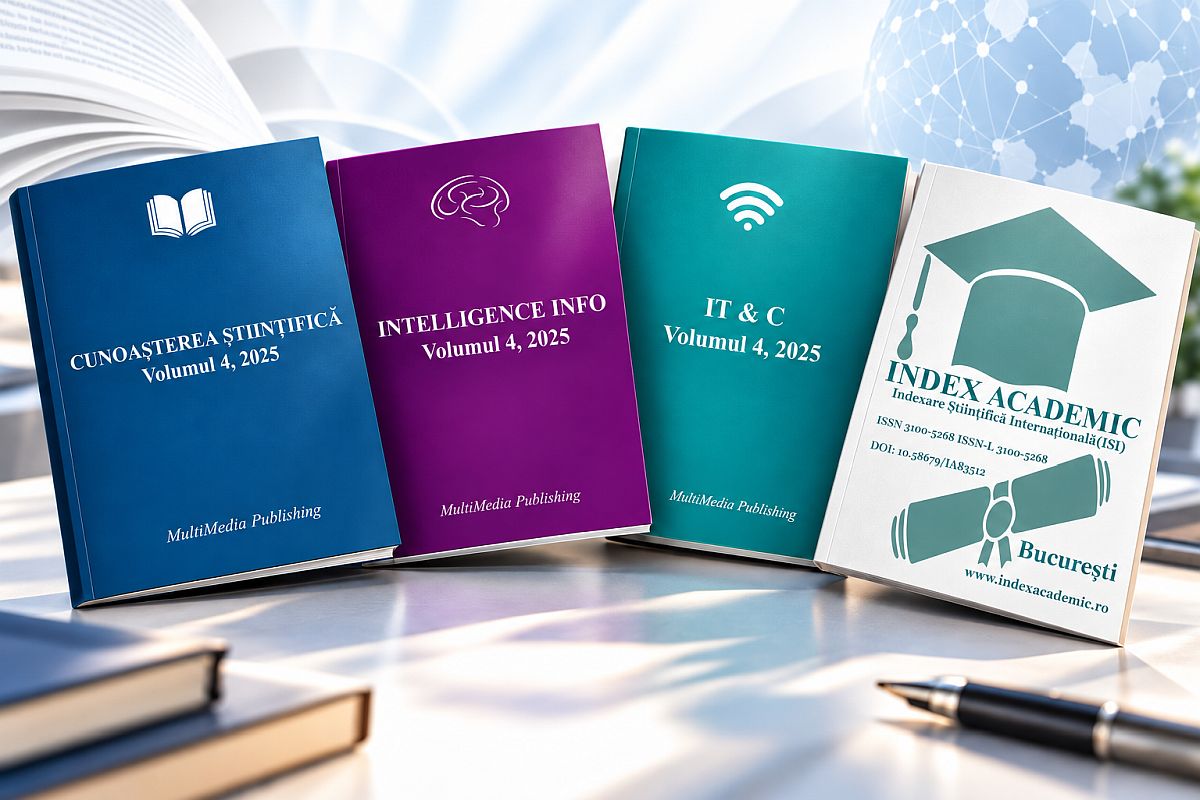
From Open Access to Articles to Open Access to Complete Digital Issues
Articles published in MultiMedia Publishing journals have already been individually available on an open-access basis. The new measure extends this principle to the complete digital journal issue.
Readers may therefore choose between consulting a particular article and downloading the complete digital issue in which it appears. Where annual digital editions bringing together the issues published during a year are available, these editions are also provided free of charge.
This establishes a clear publishing model:
scholarly content in digital format is available through open access, while physical printed editions may be purchased separately.
This distinction makes it possible to retain printed editions for readers, authors, libraries, and institutions wishing to obtain physical copies without making access to scholarly information dependent on their purchase.
Wider Circulation of Scholarly Information
Through this change, MultiMedia Publishing aims to achieve more than simply making a collection of digital files free of charge. The broader objective is to facilitate the widest possible circulation of published scholarly information.
Free access to complete digital issues can encourage interdisciplinary exploration of journals, facilitate the discovery of articles beyond a reader’s immediate field of interest, and support the use of publications in research, documentation, and education.
Greater accessibility can also improve the visibility of authors and their published work and may facilitate its discovery, reading, and citation within the academic community.
Removing financial barriers is particularly relevant for independent readers, students, researchers without institutional subscriptions, and those working in institutions or regions where access to scholarly literature is limited.
An Extended Concept of Open Access
For MultiMedia Publishing, open access is not regarded solely as a characteristic of an individual article page. Wherever possible, it should also be reflected in the broader way scholarly content is organised, presented, archived, and made available to the public.
From this perspective, free access to complete digital editions complements other measures introduced to improve the journals’ infrastructure, including the development of scholarly metadata, persistent identification through DOI, improved interoperability, the development of journal archives, and the gradual transition to an editorial workflow managed through Open Journal Systems (OJS).
The journal archives will provide access to historical digital issues together with links to articles, abstracts, and available complete editions.
Open Access and Publishing Sustainability
Free access for readers does not mean that scholarly publishing is free of costs. Editorial processing, digital infrastructure, metadata management, DOI registration, preparation of journal editions, and content preservation continue to require resources.
The open-access policy seeks, however, to separate these costs, as far as possible, from the reader’s access to the final scholarly output.
Printed editions will continue to be available for purchase where they are published, as physical products distinct from digital access to scholarly content.
Knowledge Becomes More Valuable When It Circulates
By making complete digital journal issues freely available, MultiMedia Publishing continues its development towards a publishing model in which accessibility, visibility, interoperability, and long-term preservation are understood as parts of the same mission.
The aim is to enable published articles to reach the widest possible audience and to remain accessible regardless of a reader’s financial resources or access to an institutional subscription.
- Cunoașterea științifică: https://www.cunoasterea.ro/en/
- Intelligence Info: https://www.intelligenceinfo.org/en/
- IT & C: https://www.internetmobile.ro/en/
- Index Academic: https://www.indexacademic.ro/en/
Access to knowledge does not end when an article is published. Publishing fulfils its purpose when information can be discovered, read, used, and shared further.
Discover more from MultiMedia
Subscribe to get the latest posts sent to your email.




Leave a Reply