




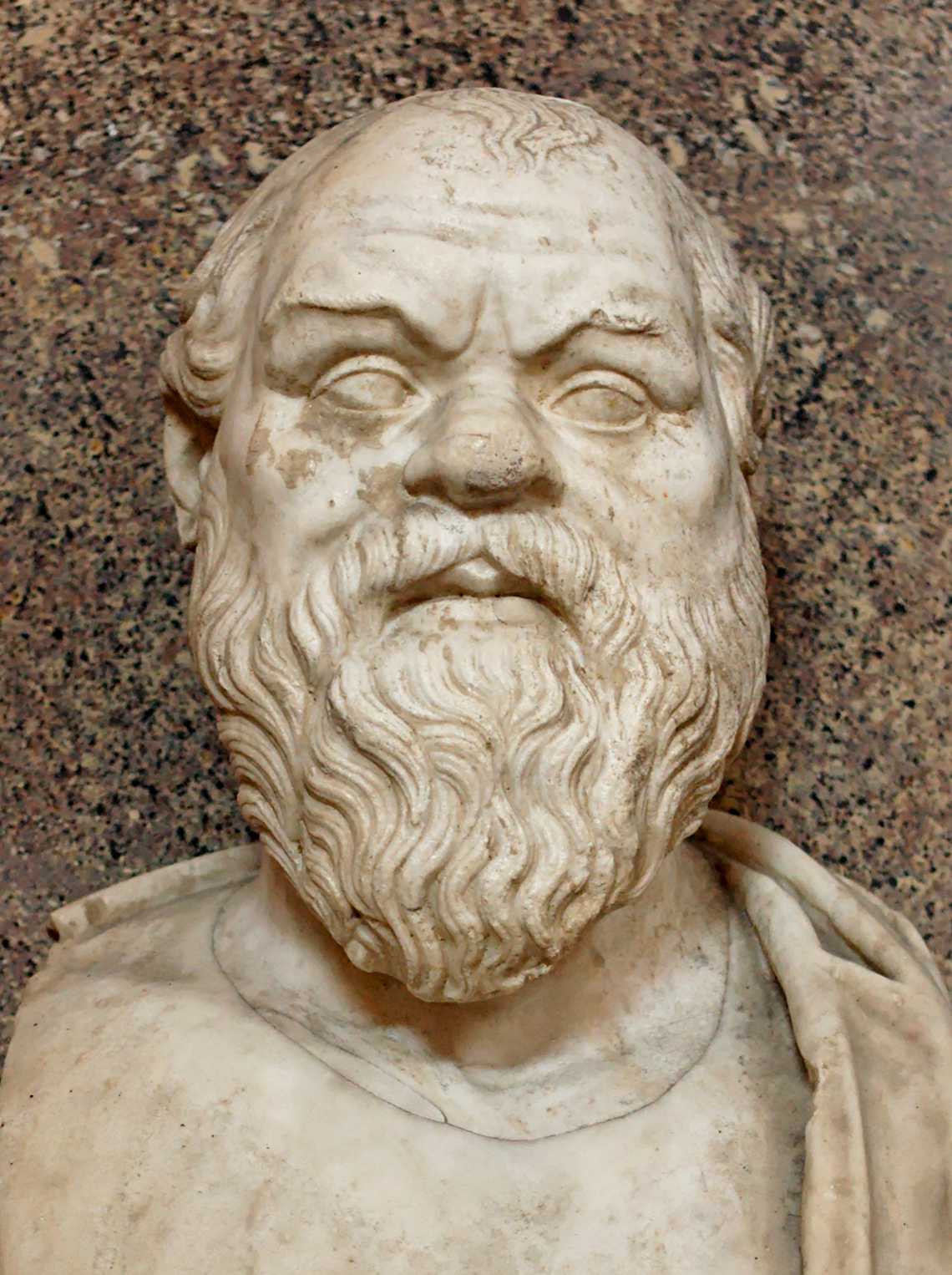
 Around Socrates was a whole host of sophists, rhetoricians, exegetes, poets, and prophets, whose wisdom is put to the test by the master; Plato parodies them more or less cruelly: there is Hippias, who boasts of teaching and practicing all the arts; there is Protagoras, who can only end a discussion on the possibility of teaching justice by telling a myth; Gorgias the rhetorician, whose teaching, which aims to be purely technical, is unconcerned with the justice of his cause; Ion, the interpreter of Homer, who obeys only inspiration, like the poet; Euthyphro, the supposed saint, who wants to avoid religious defilement rather than injustice.
Then come the young men, from Charmides, of noble birth, a cousin of Plato’s mother, a type of that reserve, that decency in attitude and speech, which is called sophrosyne, to Callicles in the Gorgias, the ambitious man of low birth, intelligent and cultured, moreover, and full of an ardent desire to impose himself on the Athenians.
Finally, the bourgeois and politicians of Athens: Critias the tyrant, a relative of Plato, who, in Charmides, shows himself to be violent and disrespectful towards Socrates; Laches and Nicias, excellent soldiers, completely entangled in strategic discussions, when they are asked what a young man should learn; the disturbing figure of Anytus, in the Meno, the conservative bourgeois who fears Socrates’ freedom of thought and will accuse him before the judges.
Source: Émile Bréhier (1951). Histoire de la philosophie, Presses Universitaires de France. Translation and adaptation by © 2025 Nicolae Sfetcu

Causal Loops in Time Travel
Welcome to the Fascinating World of Time Travel and Paradoxes!

Philosophy – Basic Notions, Volume 2
Covers ethics, politics, culture, mind, science, and art through diverse philosophical lenses.

The Republic – On Justice (Annotated), by Plato
Experience a journey into the roots of justice, governance, and human values.
Discover more from MultiMedia
Subscribe to get the latest posts sent to your email.




Leave a Reply