




Project 2025—also called the 2025 Presidential Transition Project—is a coordinated effort by conservative groups in the United States to prepare a sweeping policy and staffing blueprint for the next conservative president, with a particular focus on a second Trump administration. It is led by the Heritage Foundation, a long-standing conservative think tank in Washington, D.C.
At its core, Project 2025 is both a plan and a people-pipeline: a detailed agenda for reshaping the federal government, plus a system for recruiting and training thousands of potential appointees to carry it out. Supporters see it as a way to “take back” the federal bureaucracy from liberal influence; critics see it as a roadmap for concentrating presidential power and eroding democratic checks and balances.
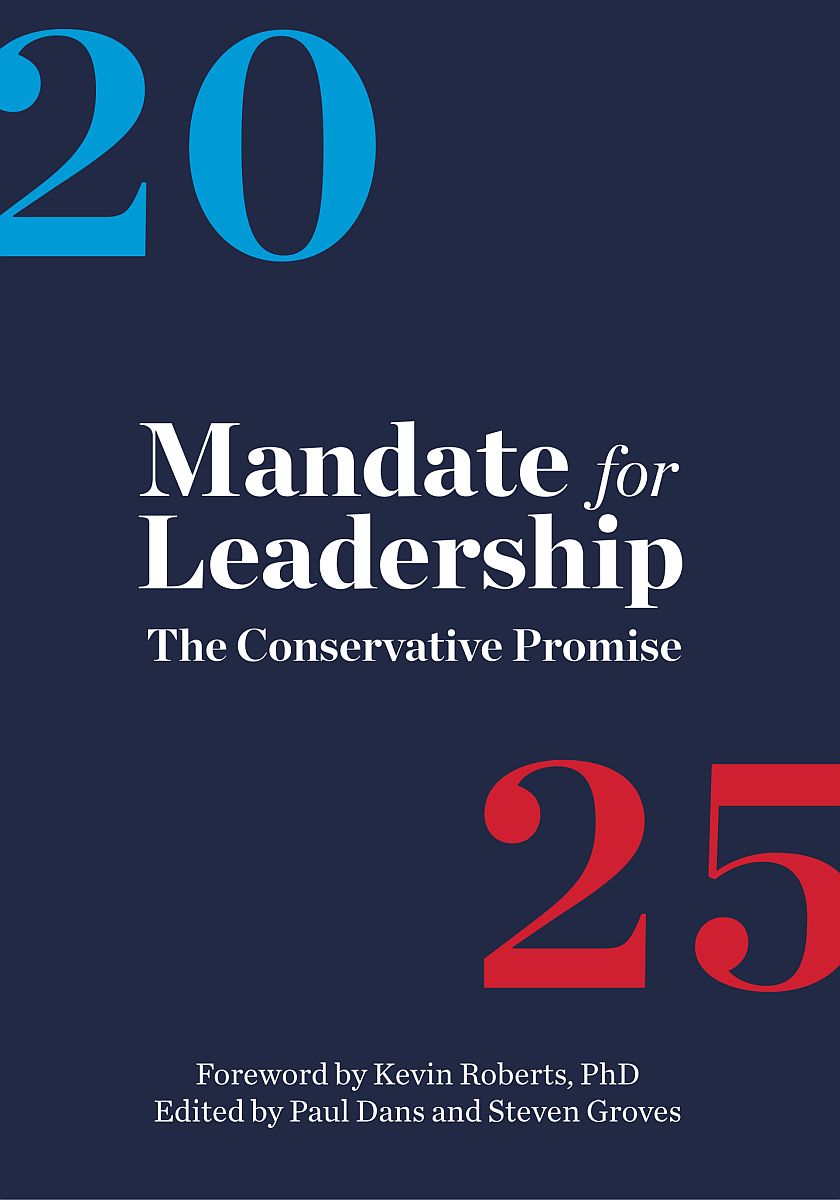 The main Project 2025 document, published April 21, 2023
Who is behind Project 2025?
Project 2025 was launched by the Heritage Foundation around 2022. Heritage describes it as a presidential transition project designed to be ready “on Day One” of a conservative presidency in 2025.
Key points about its origins and leadership:
- Parent organization: The Heritage Foundation, a major conservative think tank influential since the Reagan era.
- Goal: Provide a ready-made governing agenda and staff recommendations for the “next conservative president” after the 2024 election.
- Core contributors: A large majority of authors and organizers previously served in Donald Trump’s first administration or his 2024 campaign—roughly four-fifths of the main contributors according to one analysis.
- Scale: Heritage and partners have invested tens of millions of dollars and built partnerships with more than 100 allied conservative organizations.
Although Heritage says Project 2025 “does not speak for any candidate,” it was clearly written with a future Republican administration in mind and has been widely described as a blueprint for a second Trump term.
The four main pillars of Project 2025
Project 2025 isn’t just a single document—it’s a package with four main components, as described by the project’s own leaders:
- Mandate for Leadership: The Conservative Promise
- A 900-plus-page policy book covering almost every federal department and major policy area.
- Offers specific recommendations on how agencies should be reorganized, what regulations should be repealed, which programs should be cut, and what new priorities should be advanced.
- Presidential Personnel Database
- A large database of conservatives who want to serve in government.
- Applicants answer ideological and background questions; social media and prior work can be scrutinized for alignment with the agenda.
- Presidential Administration Academy
- Training programs (largely online) meant to prepare future appointees to step into federal roles already steeped in Project 2025’s governing philosophy and priorities.
- Transition Playbooks and “Day One” Plans
- Internal planning on how to rapidly move personnel into key jobs and issue executive orders and directives as soon as a conservative president is inaugurated.
Together, these pillars are meant to avoid what conservatives saw as early-term chaos and resistance in Trump’s first administration and instead arrive with a ready-made government-in-a-box.
What does Project 2025 want to change?
The agenda runs hundreds of pages, but analysts tend to group its ambitions into a few big themes.
1. Expanding presidential control over the executive branch
Project 2025 strongly embraces a broad version of the “unitary executive” theory—the idea that the president should directly control essentially the entire executive branch.
The plan calls for:
- Reducing or eliminating the independence of agencies such as the Department of Justice, FBI, Federal Trade Commission (FTC), Federal Communications Commission (FCC), and others, bringing them more directly under White House control.
- Making it easier for the president to remove officials across the executive branch.
- Dismissing many senior State Department and other leadership roles before January 20, 2025, as part of a reset of foreign-policy and bureaucratic leadership.
Supporters argue this would rein in an “unaccountable bureaucracy”; critics say it would cripple agency independence and weaken traditional checks on abuse of power.
2. Reshaping the federal workforce
A central aim of Project 2025 is to replace large parts of the non-partisan civil service with ideologically aligned appointees.
Key ideas include:
- Reclassifying tens of thousands of civil service positions so they can be easily fired and replaced, reviving and expanding concepts like Trump’s earlier “Schedule F” order.
- Using ideological questionnaires and background screening to ensure hires are loyal to the administration’s “America First” agenda.
- Encouraging termination of officials associated with diversity, equity and inclusion (DEI) initiatives or policies seen as “woke.”
Unions and watchdog groups warn this would politicize the civil service and create loyalty tests for government jobs; supporters say it would ensure federal staff actually implement the elected president’s program.
3. Social policy: abortion, LGBTQ+ rights, and “family”
Project 2025 lays out a socially conservative agenda across multiple agencies:
- Abortion: Calls for new restrictions and a reworked federal posture on abortion, with some proposals aimed at limiting abortion access nationwide through reinterpretation of existing law and regulation.
- Gender and sexuality: Opposes what it calls “radical gender ideology,” seeks to roll back protections for LGBTQ+ people in federal policy, and wants to redefine “sex” in laws like Title IX as strictly biological sex at birth.
- DEI and civil-rights enforcement: Recommends eliminating DEI requirements and programs across the federal government and narrowing civil-rights enforcement in areas like education and employment.
Related to these themes, Heritage has also floated pronatalist policies—what one report called a “Manhattan Project for more babies”—to promote traditional married, heterosexual families and encourage higher birthrates.
4. Immigration and border enforcement
Project 2025 envisions a dramatically tougher immigration system:
- Abolish the current Department of Homeland Security and replace it with a more tightly focused immigration and border-enforcement entity combining agencies like CBP, ICE, TSA, and USCIS.
- Sharply curtail refugee admissions and significantly increase fees on asylum seekers and other applicants, treating these fees as a major revenue source.
- Intensify interior enforcement to “arrest, detain, and remove immigration violators anywhere in the United States.”
These ideas align closely with the hard-line immigration policies advanced by some Trump-era advisers, several of whom are deeply involved in Project 2025.
5. Economy, regulation, and climate policy
On economic and regulatory issues, the project leans heavily toward small-government, deregulatory, and free-market solutions:
- Strong criticism of the Federal Reserve, with some suggestions that it should be reduced or ultimately replaced, and calls for exploring commodity-backed currency.
- Support for extending and deepening tax cuts, and moving in the long term from income taxes to a national consumption tax.
- Large-scale deregulation, particularly in areas of climate and environmental policy. The agenda seeks big rollbacks of Biden-era climate regulations and reduced climate-related financial oversight.
6. Education and research
In education, the plan seeks to slash federal influence and sharply limit what Washington can require of schools:
- Eliminate the U.S. Department of Education, shifting many functions to states or other federal departments.
- Promote school choice, charter schools, and greater control for parents over curriculum content.
- Reduce federal enforcement of civil-rights protections in schools, routing remaining enforcement through litigation at the Department of Justice rather than administrative action.
It also urges that federally funded research be aligned with “conservative principles,” suggesting cuts to fields like climate science or DEI-related research seen as ideologically biased.
7. National security and China
Project 2025 treats China as the primary long-term strategic threat and calls for a more confrontational stance:
- Strengthening the U.S. nuclear deterrent and pushing allies to take on more regional defense responsibilities.
- Restricting U.S. economic ties with China, including discouraging American pension and corporate investment in critical sectors there.
- Banning or tightly restricting platforms and institutions viewed as vehicles for Chinese influence, such as TikTok and Confucius Institutes.
How do supporters describe Project 2025?
From the perspective of its architects and allies, Project 2025 is meant to:
- “Deconstruct the administrative state”—their phrase for rolling back what they see as an overgrown, left-leaning bureaucracy that frustrates the will of voters.
- Restore the traditional family, national sovereignty, religious freedom, and stricter law-and-order policies.
- Ensure that “personnel is policy,” by putting committed conservatives into key positions rather than relying on career officials or bipartisan technocrats.
Supporters see the project as a preparation exercise: instead of improvising after an election, they want a conservative president to arrive with a fully worked-out agenda, legal theory, and staffing plan ready to execute.
What are the main criticisms?
Civil-rights groups, many legal scholars, labor unions, and a wide range of critics across the political spectrum have raised alarms about Project 2025. Major concerns include:
- Democratic backsliding: Critics argue that expanding presidential control over independent agencies, politicizing the civil service, and weakening checks and balances could move the U.S. toward a more authoritarian model of executive power.
- Threats to civil liberties: Opponents warn that proposed changes to policing, surveillance, immigration enforcement, LGBTQ+ protections, and reproductive rights could erode civil and human rights for many groups.
- Church–state and pluralism concerns: Some analysts describe the project as infused with a form of Christian nationalism that blurs the line between religious doctrine and public policy.
- Impact on vulnerable communities: Advocacy organizations say the plan would dismantle social safety-net programs, cut worker protections, and roll back decades of progress in civil-rights and anti-discrimination law.
Groups like the ACLU and Democracy Forward have published detailed critiques and “people’s guides” warning of broad impacts on everyday life if the agenda is fully implemented.
Where does Project 2025 stand now?
Although Project 2025 started as a pre-election blueprint, it has increasingly become tied to real-world policymaking:
- Many of the project’s authors and organizers now hold roles in Donald Trump’s second administration, which began in January 2025.
- Reporting indicates the administration has moved to re-create Schedule F-style job classifications, ease the firing of federal workers, and cut or restructure agencies in line with Project 2025’s recommendations.
- The administration has also pursued restrictions on abortion and transgender rights, reduced DEI initiatives, and frozen or cut funding for climate and infrastructure projects, actions that closely track the project’s policy menu.
At the same time, public awareness and controversy around Project 2025 have grown. Polls and news coverage suggest it is unpopular with many voters, and it has become a major flashpoint in broader debates about the future of American democracy and the role of the federal government.
In short
Project 2025 (the 2025 Presidential Transition Project) is:
- A comprehensive conservative blueprint for restructuring the U.S. government and policy landscape.
- Organized by the Heritage Foundation and heavily staffed by former Trump officials.
- Built on four pillars: a massive policy book, a personnel database, a training academy, and detailed transition playbooks.
- Designed to centralize power in the presidency, overhaul the civil service, and advance a socially conservative, nationalist policy agenda across immigration, education, social issues, the economy, and national security.
- The subject of sharp controversy, praised by supporters as necessary reform and condemned by critics as a threat to democratic norms and civil rights

Politica – Introducere în Politologie
Descoperă fundamentele politicii și ale științei politice!

Geopolitica energiilor regenerabile în contextul schimbărilor climatice
Descoperiți viitorul energiei globale printr-o lectură esențială pentru epoca noastră!

Filosofie – Noțiuni de bază, Volumul 1
Descoperiți esența filosofiei într-o carte accesibilă și cuprinzătoare!
Discover more from MultiMedia
Subscribe to get the latest posts sent to your email.





Leave a Reply