Problem of Evil

posted in: God 0

In philosophy, more specifically in theology, the problem of evil is the question of how to reconcile the existence of evil with that of an omniscient, omnipotent and good God. We can distinguish two forms of the problem of evil: … Read More

Logicism

Logicism is an attitude towards mathematics according to which it is an extension of logic and therefore all mathematical concepts and theories are reducible to logic. If this program were feasible, it could support logical positivism in particular, and reductionism … Read More

Nominalism

posted in: Philosophy 0

Nominalism is a philosophical doctrine which considers that concepts are human constructions and that the names which relate to them are only conventions of language. Beings are not intrinsically carriers of the concepts by which we apprehend them. For example, … Read More

Theoretical philosophy

posted in: Philosophy 0

Logic Logic is not concerned with concrete content, but with the laws of consistency. She asks, based on which rules out certain conditions specific ( “premises”) result or can not be drawn conclusions. To that extent, it addresses the basis of all argument- based science. In earlier … Read More

Physicalism

posted in: Mind 0

Physicalism, a term coined by Rudolf Carnap, is the thesis, or doctrine, that all knowledge is reducible, at least theoretically, to statements of physics. The human and social sciences, just like the natural sciences, which each have their specific vocabulary … Read More

Problem of induction

posted in: Science 0

The problem of induction (also: Humean problem or Hume problem) is a basic problem of epistemology. It relates to the question of whether and when a conclusion by inducing individual cases to a generally applicable law is permissible. It was first mentioned by David Hume around 1740 . Although the problem of induction was … Read More

Hallucination

posted in: Mind 0

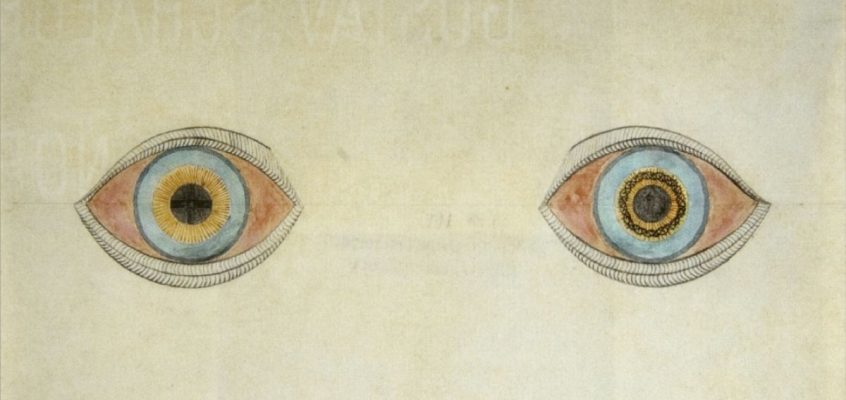
(My eyes at the moment of the apparitions by August Natterer, a German artist who created many drawings of his hallucinations.) A hallucination is defined, in psychiatry, as a sensory perception without the presence of a detectable stimulus: for example … Read More

1 … 56 57 58 59 60 61 62 … 384