




Antifa (short for anti-fascist) is best understood as a loose movement—not a single organization—with roots in European anti-fascist organizing of the 1920s–30s. The term itself is borrowed from German (“Antifa,” a shortening of Antifaschistische Aktion), and in the U.S. today it refers to a milieu of activists whose core aim is confronting far-right extremism and white supremacy.
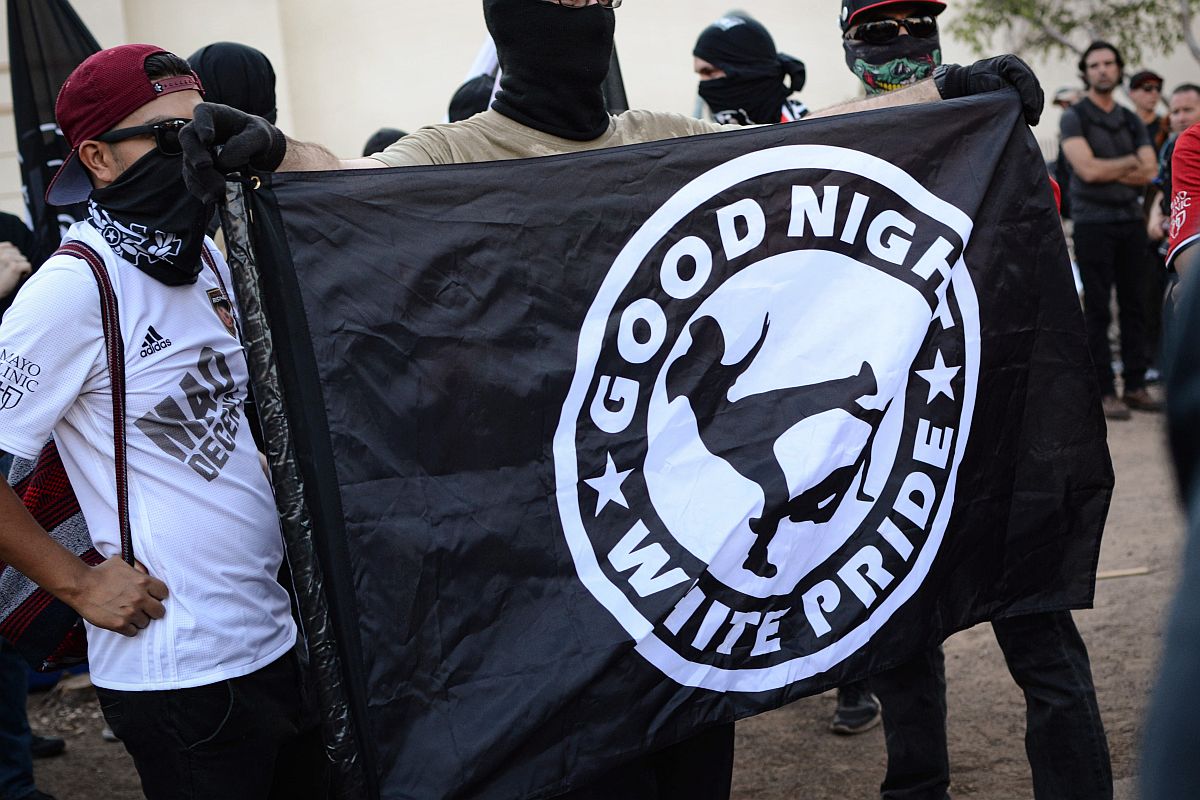
Anti-fascists with banner reading “good night white pride”, 2017
There’s no national membership roll, headquarters, or elected leadership. Instead, antifa activity tends to occur through small, autonomous collectives and ad-hoc networks that share information and coordinate actions locally. Think of it as a tactic-driven current within the broader left rather than a formal group. Research organizations and encyclopedias consistently describe it as decentralized.
Tactics range from entirely legal activities—like counter-protests, community organizing, and “deplatforming” efforts—to confrontational direct action, including doxing, property damage, and, at times, brawling with far-right groups. Supporters argue that militant resistance is sometimes necessary to prevent fascist organizing; critics contend that such tactics are illiberal and often counterproductive. Both the tactical spectrum and the debate around it are well-documented in scholarship and explainers.
Antifa drew more attention in American politics after 2016 and during set-piece confrontations (e.g., Berkeley, Charlottesville) and the 2020 protest wave, with especially visible scenes in places like Portland. Analysts generally find that while some individuals linked to antifa engaged in violence, most protest participants were not part of any organized “antifa” entity and the movement lacks centralized command.
Under U.S. law there is no formal mechanism to designate domestic groups as terrorist organizations (that tool exists for foreign organizations). Federal law defines “domestic terrorism,” but it is not a standalone federal criminal charge, and U.S. policy focuses on individuals’ criminal acts rather than labeling domestic movements per se. This legal framework is why designations aimed at antifa are largely symbolic and contested.
Antifa is a decentralized anti-fascist movement whose participants share an oppositional stance toward far-right politics and sometimes employ disruptive or militant tactics. It’s not a membership organization you can join so much as a set of practices and networks—admired by some as vigilant defense against fascism, condemned by others as illiberal or violent. Understanding antifa therefore requires paying attention both to its ideas (anti-fascism) and to the tactics different adherents choose to use.

Information and Communications Technology in Romania – Comparative Analysis with the EU, Social Impact, Challenges and Opportunities, Future Directions
Perfect for policymakers, researchers, and ICT enthusiasts ready to explore Romania’s potential in the European digital sphere.

Dating and Interpersonal Relationships
Unlock the complexities of dating, love, and relationships with this free, comprehensive guide.

Easter Traditions
Dive into the fascinating world of Easter with a beautifully curated guide.
Discover more from MultiMedia
Subscribe to get the latest posts sent to your email.







Leave a Reply